

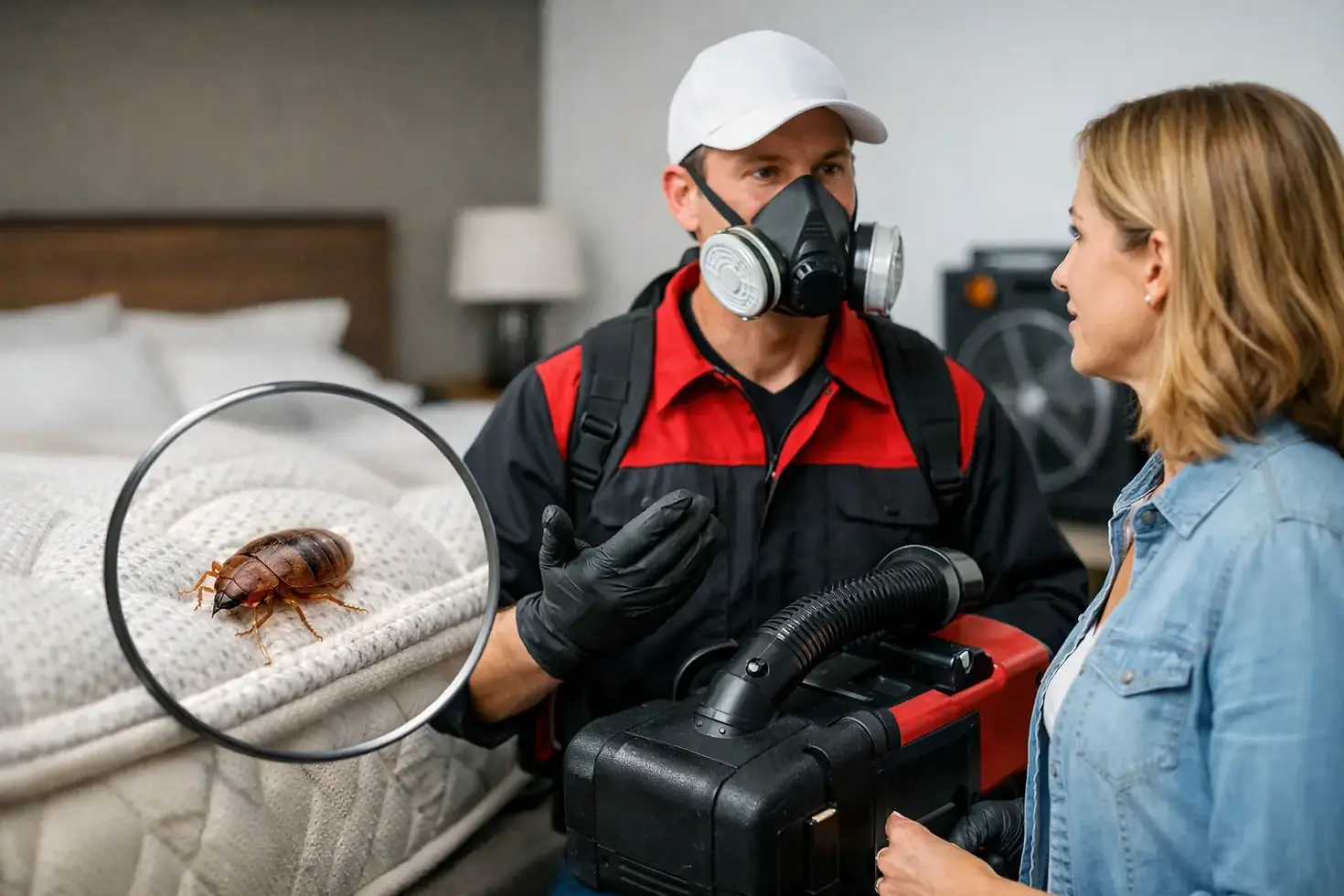
How to Choose Bed Bug Heat Specialists Safely

A bed bug heat treatment can be the fastest route back to a usable bedroom, flat, hotel room or rental property - but only when it is run properly. Knowing how to choose bed bug heat specialists means looking beyond a promise to “heat the room”. Bed bugs hide in seams, voids, furniture joints, skirting boards and electrical areas. A successful treatment depends on reaching lethal temperatures in those hiding places, holding them for long enough and proving the heat reached every critical zone.
Cheap treatments often fail for a simple reason: heat was introduced, but not controlled. Professional heat eradication is a monitored process, not a few heaters left running in a room.
How to Choose Bed Bug Heat Specialists: Start With Their Process
Ask a provider to explain exactly what happens from inspection to completion. A specialist should be able to give a direct, practical answer. They should identify likely harbourage areas, assess the size and layout of the property, plan equipment placement and explain what preparation is needed before treatment day.
The detail matters because every property behaves differently under heat. A small bedsit with limited furniture requires a different set-up from a multi-bedroom house, a hotel floor or a converted Victorian flat with numerous voids. Thick mattresses, dense wardrobes, piled belongings, cold external walls and adjoining rooms can all affect how heat moves through the space.
A credible operator does not rely on a single room temperature reading. They use industrial heat equipment alongside multiple sensors positioned around the treatment area. These sensors should provide live data throughout the process, allowing the technician to see whether temperatures are rising evenly and whether the required exposure is being maintained.
Ask what happens if a cold spot is identified. The right answer is not “the heaters will sort it out”. It is that the technician will adjust airflow, reposition equipment, move or open furniture where appropriate, and use targeted high-temperature equipment on difficult zones. This is how heat reaches the places bed bugs use to survive.
Do Not Confuse Heat Equipment With Heat Expertise
Industrial heaters are essential, but they are only one part of the operation. Bed bug heat treatment requires an understanding of insect behaviour, room dynamics and risk management. Bed bugs do not remain politely on the centre of a mattress while treatment takes place. They can occupy migration routes around beds, sofas, floor edges, wall fixings and furniture.
A specialist must manage these routes while controlling the whole environment. Handheld high-temperature equipment may be needed for bed frames, upholstered furniture, cracks and detailed areas that need direct attention. Thermal imaging can also help locate cold zones or areas where the heat is not penetrating as expected.
Be cautious of providers who cannot explain their monitoring system, treatment duration or method for checking hard-to-reach areas. A low quote may reflect less equipment, fewer sensors, shorter treatment time or an approach that treats the visible infestation rather than the full problem.
Heat treatment is a premium service because it needs professional machinery, trained operators and sustained supervision. The aim is not to make a room feel hot. The aim is to eradicate live bed bugs and eggs in one controlled visit wherever the property and infestation conditions allow.
Ask How They Deal With Eggs and Insecticide Resistance
Eggs are one of the main reasons bed bug infestations return after incomplete treatment. Many standard insecticide programmes require repeat visits because eggs can hatch after the initial application. Bed bugs have also developed resistance to commonly used insecticides, particularly in heavily affected urban areas and accommodation settings with frequent occupant turnover.
Heat works differently. When correctly applied and monitored, it kills bed bugs at all life stages without relying on insecticides. That makes it particularly valuable in bedrooms, baby nurseries, furnished lets, hotels and properties where residents want to avoid chemical residues.
However, “chemical-free” should not be treated as shorthand for “simple”. Heat must be safely controlled around heat-sensitive items, electronics, aerosols, candles, plants and personal belongings. A competent company will provide a clear preparation list and explain what can stay, what must be removed and what needs protecting.
They should also explain whether any limited supplementary treatment is recommended. In some properties, targeted work around migration points or adjoining risk areas may be sensible. The key is transparency. You need to know why it is being proposed and how it supports the heat treatment plan.
Check How They Protect the Property During Treatment
Bed bug treatment should be decisive, not careless. Before booking, ask how the company manages fire safety, electrical equipment, sensitive belongings and access to the property. The technicians should assess the site before starting and monitor it throughout treatment rather than leaving equipment unattended.
Preparation guidance should be specific. You may need to remove certain possessions, reduce clutter, open drawers, separate furniture from walls or arrange access to all rooms. Good preparation is not an inconvenience invented by the contractor. It gives heated air a route into the spaces bed bugs use and reduces the chance of protected cold pockets.
For landlords, managing agents and hospitality operators, discretion and operational planning are equally relevant. Ask whether the provider can work around check-in times, tenant access, room turnaround requirements and the need to protect reputation. A rushed job that leaves bed bugs behind costs far more than a properly planned treatment.
Look for Evidence, Not Reassuring Sales Language
The strongest bed bug heat specialists are confident because their process is measurable. They should be willing to explain how they record temperatures, how long the target conditions are held and how they verify completion before equipment is removed.
Ask these questions before accepting a quote:
How many temperature sensors will be used, and are they monitored remotely in real time?
How do you find and correct cold spots behind furniture, in voids and around external walls?
Will you use airflow management and targeted handheld heat where necessary?
How long will the property remain under controlled treatment conditions?
What preparation is required, and what happens if the preparation cannot be completed?
What guarantee is provided, and what are its conditions and exclusions?
A written quote should set out the treatment area, the work included, the preparation requirements and the guarantee position. Avoid vague descriptions such as “bed bug spray and heat service” without a defined process. You need clarity on whether you are paying for a full-property thermal treatment, a single-room treatment, a supplementary service or an inspection only.
Consider the Scope of the Infestation, Not Just the Room You Found It In
Seeing bites or spotting bed bugs in one bedroom does not automatically mean the infestation is limited to that room. Bed bugs can travel in laundry, luggage, furniture and personal belongings. In flats, hotels and shared accommodation, neighbouring rooms or adjoining units may need consideration depending on the evidence.
A specialist inspection should account for the history of the infestation. Have bites continued after spray treatments? Has furniture been moved between rooms? Has there been recent travel, a guest stay, a second-hand furniture purchase or a tenant changeover? These details help determine the right treatment boundary.
There is a trade-off here. Treating too small an area can leave a reservoir of bed bugs nearby. Treating a larger area costs more and may require greater preparation. The right decision comes from evidence and inspection, not fear or guesswork.
Choose a Provider That Takes Accountability Seriously
The final test is accountability. A bed bug heat specialist should not blame the customer if the treatment plan was poorly designed, nor promise results without checking the conditions that affect them. They should set expectations clearly, provide preparation guidance and stand behind a treatment carried out to the agreed standard.
At Extreme Heat Treatments UK, the approach is based on controlled heat, WiFi-monitored sensors, cold-spot identification and targeted treatment of the areas where bed bugs attempt to hide or migrate. We do not guess, we monitor.
If you are comparing quotes, choose the company that can show you how it will reach the difficult places, measure the treatment and take responsibility for the result. When bed bugs are disrupting your home, tenants or guests, certainty is worth far more than a room that was merely heated for a few hours.


Comments