

How to Contain Bed Bugs Before They Spread

A bed bug sighting can make people want to strip the room, sleep on the sofa and carry belongings straight outside. That reaction is understandable, but it is often how an infestation reaches new rooms. Knowing how to contain bed bugs means restricting where they can travel while preserving the evidence and access needed for a complete treatment.
Containment is not eradication. Bed bugs hide in narrow gaps around beds, furniture, skirting boards, sockets, luggage and upholstered items. They can survive for long periods without feeding, and eggs are easily missed by surface-level cleaning. The immediate objective is to stop the problem moving through the property until it can be treated properly.
How to contain bed bugs without spreading them
The first rule is simple: do not move your sleeping area unless a pest professional tells you to. Bed bugs are attracted to their host. If you begin sleeping in a spare room or on the sofa, hungry insects can follow, or you may transfer them on bedding, clothing or personal items. What began as a contained bedroom issue can become a whole-property problem.
Keep the affected room in normal use where possible, but reduce opportunities for insects to travel. Pull the bed slightly away from walls, bedside furniture and curtains so bedding does not touch the floor. Check that duvets, sheets and blankets are not trailing. If the bed has legs, bed bug interceptors can provide a useful monitoring barrier, although they do not replace treatment.
Avoid carrying loose items from the room. Phones, books, chargers, shoes, bags and laundry can all offer hiding places. Anything that must leave should be inspected carefully and placed in a sealed bag or box first. This is particularly important in shared houses, blocks of flats, hotels and hostels, where a single uncontained item can introduce bed bugs to another room.
Bag laundry before it leaves the room
Bedding, nightwear and washable clothing should be placed directly into soluble laundry bags or sealed plastic bags inside the affected room. Do not shake bedding out, sort it on the landing or carry it uncovered through the property.
Take sealed bags straight to the washing machine. Wash items at the highest temperature permitted by the care label, then use a hot tumble-dry cycle where suitable. Heat from a proper dryer cycle is often more reliable than washing alone for killing bed bugs and eggs on washable fabrics. Once treated, put clean items into fresh sealed bags or containers rather than returning them to an untreated room.
Dry-clean-only items, delicate fabrics and large soft furnishings need a different plan. Do not assume a quick spray or a few hours in a domestic freezer will solve the issue. Keep these items isolated and identify them during the professional inspection.
Reduce clutter, but do not distribute it
Bed bugs benefit from clutter because it creates more protected harbourage. Reducing clutter makes inspection and treatment more effective, but emptying drawers into bin bags and moving them around the home is counterproductive.
Work methodically in the affected room. Put items into clearly labelled sealed bags or lidded boxes, separating items that need laundering from those that need inspection. Keep containers in the same room unless they are being taken directly for treatment. Do not donate, sell or dispose of potentially infested furniture without wrapping it first. A discarded mattress left exposed outside can spread the infestation to another household.
If a mattress or base is structurally sound, it can often be treated. Throwing furniture away too early can be expensive and may not remove the insects hiding elsewhere in the room.
What not to do when bed bugs are active
The most common containment mistakes are caused by panic and over-the-counter products. Avoid foggers, smoke bombs and indiscriminate insecticide spraying. These products rarely penetrate the deep cracks where bed bugs and eggs remain. They can also drive insects into adjoining rooms, walls or neighbouring flats, making eradication more difficult.
Do not use domestic heaters, steam cleaners or hairdryers as a whole-room solution. Professional heat treatment relies on controlled temperatures, sustained exposure, air movement and monitored sensors. A room may feel hot while cold spots remain inside furniture, beneath flooring edges or behind fittings. Those cooler areas can protect insects and eggs.
Vacuuming can help remove visible insects, cast skins and debris from seams, bed frames and floor edges, but it is only a supporting measure. Use a crevice tool, work slowly and seal the vacuum contents immediately in a bag before placing them in an outside bin. Never move an unsealed vacuum through other rooms after cleaning an affected area.
Confirm the extent of the infestation
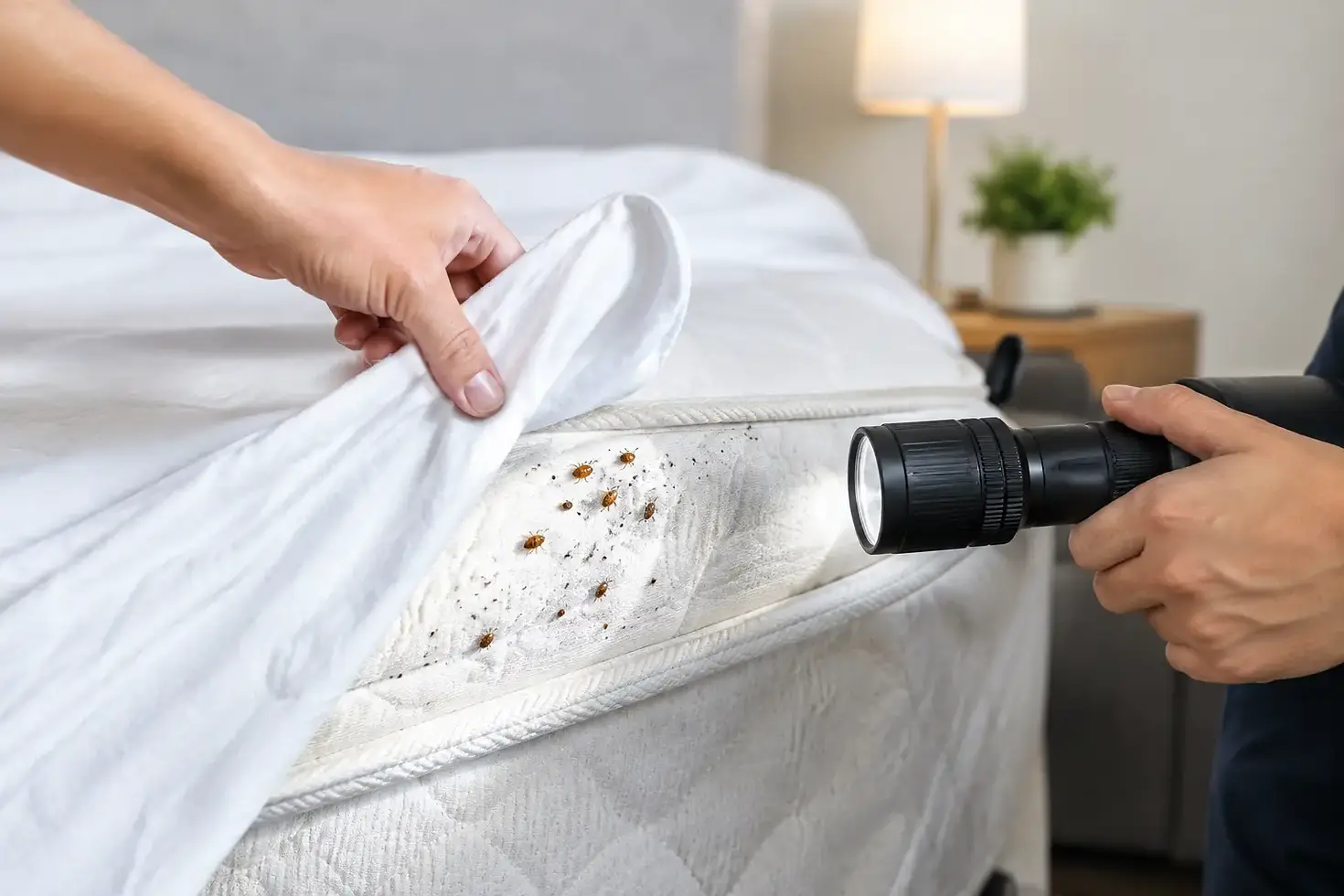
Before treatment, gather useful information without disturbing every possible hiding place. Note where bites have occurred, when insects were first seen and whether anyone has recently travelled, stayed overnight or brought in second-hand furniture. Look for small dark spotting, pale shed skins, eggs and live insects around mattress seams, headboards, divan bases, curtain folds and nearby furniture joints.
Do not rely on bites alone. Skin reactions vary significantly, and bites can resemble those from fleas, mosquitoes or other causes. A trained inspection establishes whether bed bugs are present, identifies likely migration routes and determines whether other rooms need attention.
In flats, terraced homes and hospitality premises, communication matters. Bed bugs can travel through service routes, wall voids and shared furnishings. Landlords, managing agents or site managers should be informed promptly so containment does not stop at the door of one room while activity continues next door.
Prepare for professional heat treatment
A specialist treatment is most effective when the technicians can access the places bed bugs use to hide. Preparation requirements vary with the property, the extent of activity and the treatment method, so follow the instructions provided for your specific job rather than copying generic online checklists.
For a professional heat treatment, the room is brought to lethal temperatures and held there for a controlled period. At Extreme Heat Treatments UK, industrial heat equipment, WiFi-monitored sensors and thermal imaging are used to verify conditions across the treatment area. We do not guess, we monitor. Cold spots are identified and migration zones can be targeted with handheld high-temperature equipment, helping to reach insects and eggs that conventional sprays may miss.
Residents, pets and plants will need to leave the treatment area, and heat-sensitive belongings must be identified in advance. Aerosols, candles, wax products, certain medicines, musical instruments and delicate electronics may require removal or specific protection. Do not make assumptions about what can remain. Accurate preparation protects belongings and allows the treatment team to focus on complete eradication.
Heat treatment is particularly valuable where insecticide resistance is suspected, where occupants want to minimise chemical use, or where a fast resolution is needed in bedrooms, nurseries, hotels and occupied properties. However, success still depends on a proper survey, careful room preparation and treating the full area at risk rather than only the most obvious bed.
Containment in hotels, rented homes and shared properties
For hospitality operators, discretion and speed are essential, but closing off one room without inspecting adjacent risk areas can be a costly mistake. Keep potentially affected linen and housekeeping equipment separated, avoid transferring furnishings between rooms, and record room numbers, sightings and dates. A structured response protects guests, staff and reputation.
Tenants should report suspected bed bugs in writing as soon as possible and avoid moving belongings to friends' homes or storage units. Landlords and property managers need a clear plan for inspection, resident communication and treatment access. Delays give bed bugs more time to reproduce and spread through a building.
The right approach is calm, contained and methodical. Keep activity local, bag and treat fabrics safely, avoid chemical shortcuts, and arrange a professional assessment quickly. The sooner the infestation is controlled at its source, the less disruption it causes to the rest of the property.


Comments