


Hotel Infestation Recovery Without Guesswork

A guest reports bites after checking out. Housekeeping finds dark spotting along a bed base. Within hours, the question is no longer whether there is a problem. It is how to contain it, protect other rooms and return the affected area to service with confidence. Effective hotel infestation recovery is not a quick spray followed by hope. It is a controlled operational response built around identification, eradication, verification and clear decisions.
For hotels, hostels and serviced accommodation, the real cost of an infestation is rarely limited to one room. Bed bugs, fleas and clothes moths can affect guest confidence, staff workload, future bookings and online reputation. A weak treatment can also drive insects into adjoining rooms, linen stores, corridors or staff areas. That is why recovery must be planned around how pests move through a building, not just where they were first discovered.
Hotel Infestation Recovery Starts With Containment
The first priority is to stop unnecessary movement. Take the affected room out of service, along with any directly adjoining rooms where the inspection indicates a credible risk. This does not always mean closing an entire floor. The correct scope depends on the pest, the evidence found, room layout, service routes and the length of time the issue may have been present.
Do not move mattresses, curtains, luggage racks or loose furnishings through public areas before they have been assessed. Do not send potentially affected linen through normal laundry handling without a controlled process. Bed bugs can hitchhike on textiles, housekeeping trolleys, laundry bags and maintenance equipment. Fleas may be associated with a particular room, animal access point or soft furnishing, while moth activity often points to stored natural-fibre items rather than beds.
Containment also means recording what is known. Note room numbers, guest reports, dates, bite descriptions where volunteered, cleaning schedules, recent room moves and any visible evidence. This record helps a pest specialist establish likely spread routes and prevents the response becoming based on assumptions.
Inspection Must Establish the Actual Pest
Bites alone do not prove bed bugs. Skin reactions vary widely and may have unrelated causes. Equally, a clean-looking room is not proof that no insects are present. Bed bugs shelter in narrow cracks around bed frames, headboards, skirting boards, bedside furniture, curtain seams, sockets and luggage stands. Their eggs are small, well concealed and unaffected by many rushed treatment approaches.
A proper inspection looks for live insects, cast skins, eggs, faecal spotting and harbourage points. It should extend beyond the mattress to the structure around it. In a hotel, the inspection must also consider connecting doors, shared service voids, adjacent rooms, luggage storage, laundry routes and furniture transferred between rooms.
Identification determines the treatment plan. Heat can be highly effective against bed bugs and their eggs when the whole treatment zone reaches and sustains the required lethal temperature. However, a moth problem in a linen store or a flea issue linked to animal activity may need a different preparation plan and investigation of the source. There is no professional value in applying the same response to every insect.
Why Standard Spray Treatments Can Delay Recovery
Conventional insecticide treatments may have a place in some pest-control programmes, but they can be slow, disruptive and dependent on the insect coming into contact with a correctly applied product. Bed bugs are also widely known for insecticide resistance. If eggs survive, or adults retreat into untreated voids, the hotel can face repeat reports weeks later.
This is the point at which an apparently lower-cost response becomes expensive. Rooms remain out of sale, staff repeat inspections, guests may need to be relocated and management is left dealing with uncertainty. Repeated spraying can also introduce chemical concerns in bedrooms, especially where turnaround pressure leads to poor preparation or incomplete access.
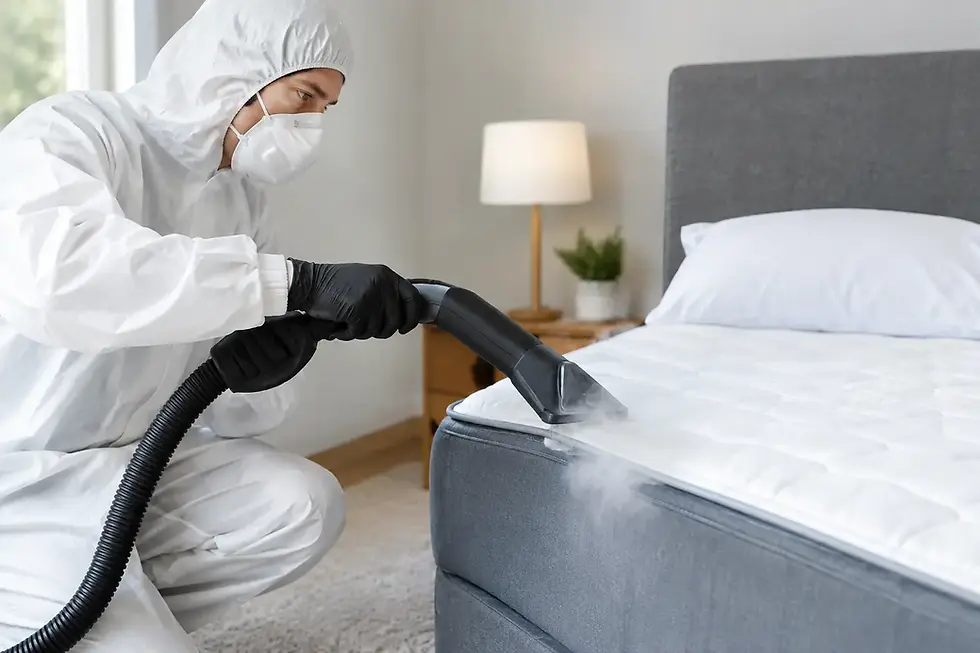
Professional heat treatment takes a different route. Industrial heat equipment raises the temperature throughout the defined treatment area, targeting insects at all life stages without relying on a residual chemical deposit. The objective is not to make the room feel hot for an hour. It is to achieve controlled, sustained lethal conditions in the places pests hide.
That distinction matters. Thick furniture, bed bases, voids, floor edges and dense textiles heat at different rates. A room temperature reading alone proves very little. We do not guess, we monitor.
Controlled Heat Requires Measurement, Not Assumption
A specialist heat treatment uses multiple wireless temperature sensors positioned throughout the treatment zone. These readings are monitored during the process to show whether target temperatures are being achieved and maintained where they matter. Thermal imaging can help identify cold spots, while technicians reposition airflow and equipment to correct uneven heating.
Handheld high-temperature equipment is then used on known harbourage areas and migration zones, including bed frames, furniture joints, skirting lines and structural gaps where appropriate. This gives the treatment precision that a broad room-heating approach cannot deliver on its own.
The treatment duration depends on the room size, contents, construction and sensor data. Rushing the process risks leaving protected areas below lethal temperature. Extending it without monitoring is not precision either. The right approach is data-led control throughout the treatment, with the room released only once the agreed process has been completed.
Preparing Rooms Without Spreading the Problem
Hotel teams have a vital role before treatment, but preparation instructions must be specific. Staff should not strip a room and transport linen, cushions or curtains elsewhere unless told how to bag, handle and process them. Each item moved without control is a possible route for transfer.
Accessible clutter should be reduced so heat and inspection can reach likely harbourages. Drawers, wardrobes and furniture may need to be opened or repositioned under the direction of the treatment team. Sensitive equipment, heat-sensitive items and guest property require individual consideration. A treatment plan should account for these before machines are switched on, not halfway through the job.
For occupied rooms or accommodation holding guest belongings, discretion and documentation matter. The hotel should establish who communicates with the guest, how property will be handled and what alternative accommodation is available if needed. Staff should be briefed on facts, not encouraged to speculate. A calm, practical message is better than an inconsistent explanation passed between departments.
Reopening a Room Is a Management Decision
Eradication is central, but recovery also includes how the room returns to operation. The room should be cleaned, reset and inspected in line with the agreed post-treatment process. Mattress encasements, replacement furnishings or additional proofing may be sensible in certain circumstances, particularly where damaged divans or complex headboards create repeated harbourage opportunities. They are not substitutes for eradication.
Hotels should also review the cause of exposure where possible. Bed bugs are often introduced by guests' luggage and do not indicate poor hygiene. Still, better inspection routines, careful handling of lost property, well-designed housekeeping checks and prompt escalation can reduce the chance of a small issue becoming a multi-room event.
A proportionate monitoring plan is sensible after treatment, especially where there was evidence of spread. The level of follow-up depends on the infestation extent and property risk. A single contained room is different from a long-running issue across several floors. The key is that reopening decisions are based on treatment evidence and inspection, not pressure to sell the room that night.
Protecting Reputation Through Controlled Action
Hospitality operators understandably worry about reviews and complaints. The temptation is to minimise the issue internally and reopen quickly. That can be the wrong commercial decision if it leaves pests active and leads to further guest reports.
The more defensible position is to act quickly, document the response and use a treatment method capable of addressing live insects and eggs in one controlled visit. Extreme Heat Treatments UK provides specialist, chemical-free heat eradication for hotels and other commercial premises, using monitored temperatures and targeted treatment of cold spots and migration zones. Where the treatment plan is followed, the work is backed by a 100% guarantee.
A hotel does not need a panic response. It needs an evidence-led one: isolate the risk, establish the pest, treat every relevant harbourage area and verify the process before normal operations resume. That discipline protects guests, gives staff a clear procedure and gives management a far stronger basis for reopening with confidence.


Comments