

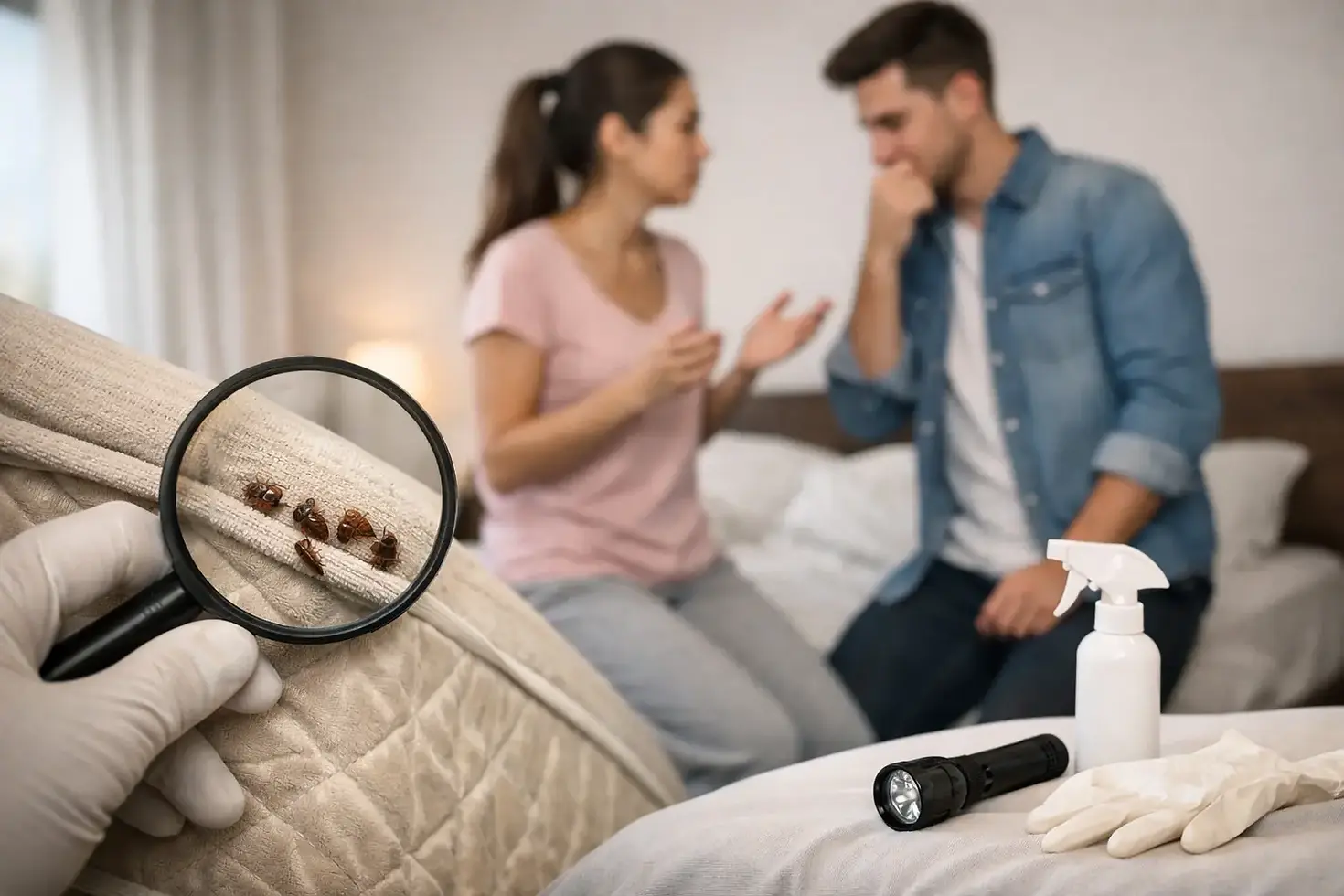
Bed Bugs in Shared House - What to Do Fast

One person wakes up with bites, another insists it is nothing, and within days the whole property is on edge. That is how bed bugs in shared house settings usually play out - confusion first, then delay, then a much larger problem than anyone expected. In HMOs, rented rooms and multi-occupancy homes, bed bugs do not stay politely in one bedroom. They move through furniture, luggage, wall voids, sockets, skirting gaps and soft furnishings, especially when people start changing rooms or dragging belongings through the house.
This is what makes shared living different. A standard domestic infestation is difficult enough. In a shared property, the risk is multiplied by movement, mixed housekeeping standards, uncertainty over responsibility and the simple fact that several people may be sleeping, storing clothes and travelling in and out at the same time. If the response is slow or fragmented, bed bugs gain ground quickly.
Why bed bugs in shared house properties spread so easily
Bed bugs are not attracted by dirt. They are attracted by hosts, warmth and regular access to sleeping areas. In a shared house, that means multiple occupied rooms, repeated human movement and plenty of hiding places. Mattresses, bed frames, sofas, curtains, bedside units and piles of clothing all give them cover.
The bigger issue is migration. Once a room is disturbed by spraying, vacuuming, heavy cleaning or people sleeping elsewhere, bed bugs often move. They can travel into adjoining rooms, behind skirting, under floor edges and around electrical points. That is why treating only the room where bites were first noticed often fails. The visible problem may sit in one bedroom, but the active infestation may already be spread across several parts of the property.
In shared accommodation, people also make understandable but unhelpful decisions. Someone may throw out a mattress without wrapping it. Someone else may move bedding into the hallway. Another housemate may use an aerosol bought online and drive insects deeper into the structure. None of this solves the infestation. It usually makes detection harder.
The first signs people miss
Most shared houses do not identify bed bugs at the first stage. They notice symptoms instead. Bites are the most common trigger, but bites alone are not proof. Some people react strongly, others barely react at all, and some do not react whatsoever. That means one tenant may be covered in marks while another in the next room shows nothing.
The more reliable signs are physical evidence around sleeping areas. Small black spotting on mattress seams, cast skins, pale eggs in cracks, and live insects in bed joints or headboards are stronger indicators. A sweet, unpleasant odour can appear in heavy infestations, though by that stage the problem is usually well established.
In a shared house, inspection needs to go wider than one bed. Bedrooms, communal seating, stored soft items and adjoining rooms all matter. A narrow check often misses the route the insects are actually using.
Who is responsible in a shared house?
This is where delay often starts. Tenants blame previous occupants, landlords wait for proof, and housemates disagree about who brought the problem in. From a pest control perspective, that argument is secondary. The priority is to confirm the infestation, define its spread and stop it becoming structurally embedded.
Responsibility depends on the tenancy agreement, the condition of the property, how long the issue has been present and whether the house is managed as an HMO. But bed bugs do not pause while that is discussed. In practical terms, the person managing the property should act quickly, document the issue properly and arrange specialist treatment before rooms become cross-infested.
For landlords and property managers, speed matters commercially as well as hygienically. A single untreated room can become a whole-house issue, and a whole-house issue is more disruptive, more expensive and harder to schedule around tenants.
Why spray treatments often underperform in shared properties
The standard approach many people expect is insecticide application. Sometimes it has a role, but bed bugs are increasingly resistant to common active ingredients, and resistance is one reason infestations return after repeated visits. In shared houses, another problem appears - incomplete coverage.
Chemical treatment depends heavily on where the product reaches, how well harbourages are identified and whether occupants follow every preparation rule exactly. In reality, shared properties are difficult to control that tightly. Rooms may be cluttered, tenants may prepare to different standards, and access can be inconsistent. Even when live insects are hit, eggs may survive and hidden pockets may remain active.
That is why repeat call-backs are so common with conventional methods. The treatment has not fully penetrated the infestation, or insects have simply moved to cooler, less treated locations.
Why heat treatment is better suited to a shared house infestation
Heat deals with the weakness of bed bugs directly. They cannot survive sustained lethal temperatures, and that includes the eggs when the treatment is delivered correctly. The critical phrase is delivered correctly. This is not a matter of putting heaters in a room and hoping for the best.
Professional heat eradication depends on controlled temperature build-up, strategic machine placement, calibrated sensors and continuous monitoring. The aim is to raise all infested contents and structural hiding points to lethal levels for a sustained period, not just make the air hot. Bed bugs hide in the places air movement does not easily reach, so cold spots have to be identified and managed in real time.
That is where specialist equipment makes the difference. Industrial heat machines, WiFi-monitored sensors, thermal imaging and handheld high-temperature tools allow technicians to track progress, expose hidden cooler areas and target migration zones such as bed frames, skirting lines, sockets, carpet edges and furniture joints. We do not guess, we monitor. In a shared house, that level of control is what turns treatment from hopeful to decisive.
What proper treatment looks like in practice
A serious response starts with inspection and treatment planning. Not every room will necessarily be infested to the same degree, but every connected risk area needs to be considered. The layout of the property, room occupancy, signs of migration and the pattern of reported bites all help shape the treatment scope.
Preparation then needs to be clear and realistic. Bedding, clothing and stored fabrics may need bagging and laundering, but preparation should support the treatment, not replace it. Excessive pre-treatment movement of items is one of the fastest ways to spread bed bugs through a house.
On treatment day, the objective is full thermal penetration. Rooms are heated in a controlled manner, temperatures are monitored remotely and adjusted as needed, and technicians check for developing cold zones where insects could survive. If a problem area is shielded by dense contents or structural features, handheld high-temperature equipment is used to drive lethal heat into those specific locations.
This is also why single-visit heat treatment can be so effective when handled properly. Instead of relying on residual chemistry and waiting for repeated exposure cycles, the process is built around complete eradication during the treatment window.
What tenants and landlords should do immediately
If you suspect bed bugs in a shared house, avoid moving bedding, mattresses or personal items into communal areas or other bedrooms. Do not rotate sleeping positions around the property. Do not rely on shop-bought aerosols as a first response. They rarely solve the root problem and often push insects further into the building fabric.
Tell everyone in the property at once, but keep the response controlled. The right next step is confirmation by a specialist who understands bed bug behaviour across multi-room environments. If the infestation is confirmed, act on the whole picture rather than the loudest room.
For landlords and managers, that means treating it as a building-level problem with room-specific intensity, not as an isolated complaint until proven otherwise. For tenants, it means reporting early and following preparation instructions exactly. Half-measures create second visits. Precision creates eradication.
The cost of waiting
Bed bugs are not known to spread disease in the way some pests do, but that does not make them minor. In shared homes they cause sleep loss, anxiety, conflict between occupants, damaged furnishings and rapid reputational issues for managed properties. Once tenants start self-treating independently, the infestation usually becomes less visible and more dispersed.
The financial difference between early intervention and delayed action is often significant. A contained bedroom cluster is one thing. A fully migrated multi-room infestation involving beds, sofas and structural harbourages is another.
For that reason, the right question is not whether the issue feels embarrassing or whether blame has been assigned. The right question is whether the infestation is being measured, controlled and eradicated with a method strong enough to deal with eggs, hidden adults and migration points in one coordinated response.
In shared accommodation, bed bugs exploit hesitation. A precise, professionally monitored treatment stops that advantage and puts control back where it belongs - with the people managing the property, not the insects hiding inside it.
If there is any doubt, deal with it early and deal with it properly. That is how you protect the rooms, the people living in them and the property itself.


Comments