


Practical Guide to Commercial Bed Bug Control

A bed bug report in a hotel room, hostel dormitory, staff rest area or furnished office cannot be treated as a minor housekeeping issue. This guide to commercial bed bug control explains what a professional response should look like: fast containment, accurate inspection, a treatment method that reaches eggs as well as live insects, and evidence that the work has been completed properly.
For commercial premises, the cost of delay is rarely limited to the treatment itself. A poorly handled infestation can lead to room closures, guest complaints, lost bookings, distressed staff and lasting reputational damage. The right approach is controlled, discreet and based on measured results rather than assumptions.
Why commercial bed bug control needs a different standard
Bed bugs are highly mobile hitchhikers. They travel in luggage, clothing, soft furnishings, laundry cages, delivery bags and discarded furniture. In hotels and hostels, turnover creates frequent opportunities for introduction. In offices, they may arrive with employees or visitors and settle in upholstered seating, lockers, quiet rooms or staff changing areas.
They are also exceptionally good at hiding. A visible insect on a mattress is only one possible sign. Bed bugs may harbour behind headboards, beneath bedside furniture, within bed frames, along skirting boards, inside electrical fittings, under carpet edges and in cracks around built-in furniture. In commercial settings, they can move between adjoining rooms through service routes, wall voids and corridors.
That is why a quick spray around a bed is not a commercial control plan. It may disturb insects and encourage them to migrate, while leaving eggs and hidden adults behind. Repeated chemical applications can also become disruptive, especially where rooms need to remain available, guests have sensitivities or the business must meet strict hygiene expectations.
The first 24 hours: contain the risk without creating panic
The first objective is to stop unnecessary movement. Do not move mattresses, chairs, linen or suspected furniture through communal areas without a containment plan. Avoid transferring guests or staff belongings from a suspected room directly into another occupied room. The problem can spread faster through well-intentioned relocation than through the insects themselves.
A manager should record the affected room or area, the date, reported signs and any recent movement of furniture or luggage. Keep the report factual. Bed bugs are not a reflection of cleanliness, and staff need clear instructions rather than blame or speculation.
Where accommodation is involved, take the room out of service until it has been assessed. Inspect neighbouring rooms, rooms above and below where practical, and spaces sharing walls or service routes. The extent depends on the building layout, the age of the report and evidence found during inspection. Treating only the room where a guest noticed bites is often too narrow.
Inspection determines the treatment boundary
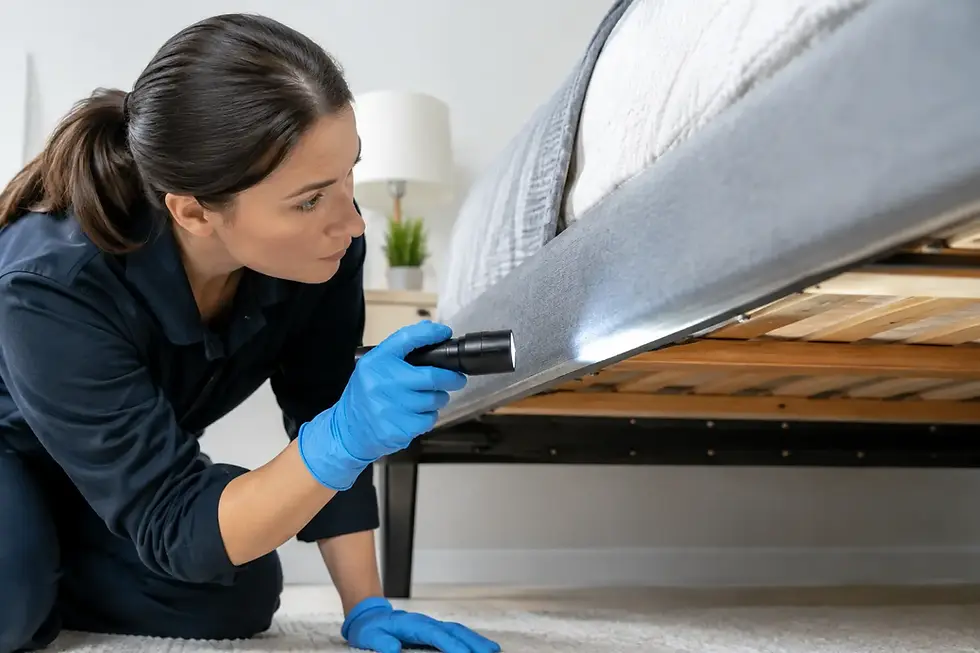
A professional inspection is not simply a look at the mattress. It establishes where activity is present, where insects could have moved and which materials or layouts will affect treatment. Technicians should check bed structures, soft furnishings, curtains, luggage storage, furniture joints, wall-floor junctions and likely migration routes.
Signs can include live insects, cast skins, pale eggs, dark spotting and small blood marks. However, no single sign should be viewed in isolation. Bites alone do not confirm bed bugs, as skin reactions vary and can have several causes. The purpose of inspection is to turn a concern into a defined treatment plan.
For a large hotel, hostel or multi-room site, documentation matters. Management needs to know which spaces were inspected, which areas require treatment, what preparation is needed and when rooms can safely return to service. This is particularly important where there are duty managers, housekeeping teams and multiple shifts.
Decide whether heat is the right method
Heat treatment is often the strongest option where a rapid, chemical-free and whole-room solution is required. Bed bugs and their eggs are vulnerable to sustained high temperatures, but achieving that result requires far more than placing heaters in a room. Heat must reach the places insects hide, not merely make the air feel hot.
A properly managed treatment uses industrial heat equipment to raise and hold temperatures at a lethal level for the required duration. Air movement is managed to carry heat around furniture and into difficult areas. Remote WiFi-monitored sensors provide live readings, allowing technicians to verify performance across the treatment zone.
This monitoring is central to the process. We do not guess, we monitor. Cold spots behind furniture, inside dense items or at the edges of a room can prevent a treatment from achieving full control if they are not identified and corrected. Thermal imaging and sensor data help the technician adjust equipment placement, airflow and treatment duration.
Heat is not automatically suitable for every item. Certain heat-sensitive possessions, aerosols, candles, pressurised containers, medicines, plants and delicate materials may need to be removed or managed separately. A competent provider will explain these requirements before treatment rather than discovering them on the day.
How a commercial heat treatment works
Preparation should be proportionate and clearly organised. Over-preparing can be as unhelpful as doing nothing, particularly if it means moving potentially infested contents into clean areas. Staff should follow the treatment provider's instructions on linen, laundry, room contents and access.
On site, technicians position industrial heaters and air-moving equipment to circulate controlled heat throughout the treatment area. Sensors are placed in representative locations, including harder-to-heat points. The aim is sustained lethal exposure, not a short temperature spike.
Furniture may be repositioned so airflow can reach behind and beneath it. Mattresses, divan bases, sofas and chairs need particular attention because their construction creates seams, folds and internal voids. In known migration zones, handheld high-temperature equipment can be used for focused treatment, including around bed frames, skirting details and furniture joints.
The duration varies according to room size, construction, contents and the extent of the infestation. A compact guest room and a heavily furnished suite do not behave in the same way under heat. The key measure is not how quickly the heaters were installed. It is whether the required temperatures were achieved and held where the insects could be hiding.
At Extreme Heat Treatments UK, commercial heat work is planned around this principle: controlled exposure, live monitoring and targeted correction of cold spots. This provides a practical route to single-visit eradication without relying on broad chemical spraying.
Protecting operations during treatment
Commercial control is always a balance between urgency and disruption. Closing a larger treatment zone may be sensible when evidence suggests migration, but it can reduce occupancy or interrupt operations. Treating too narrowly may appear cheaper in the short term yet create repeat incidents and more lost revenue later.
Good scheduling reduces the impact. Hotels may treat rooms during low occupancy periods. Offices can arrange work outside normal hours. Hostels and care-related settings may require a staged plan that protects residents and maintains essential access. The treatment plan should state who needs to be present, when power and access are required, and how treated rooms are released back to use.
Discretion also matters. A specialist team should arrive prepared, communicate directly with the nominated site contact and avoid unnecessary disturbance to guests, customers or staff. That does not mean hiding information from those who need it. It means managing the issue professionally.
Preventing reintroduction after eradication
Successful treatment removes the existing infestation. Prevention reduces the chance of another introduction becoming established. Housekeeping and facilities teams are the first line of early detection because they see beds, furniture and room turnover every day.
Train relevant staff to recognise the signs and report them immediately. Include bed bug checks in procedures for room changes, furniture deliveries, lost property handling and reports of bites. Avoid accepting used mattresses or upholstered furniture without a clear inspection process. In accommodation sites, mattress and divan encasements can make future inspections easier, although they are not a substitute for treatment.
Keep reporting simple. A delayed report because someone is unsure whom to tell is a preventable risk. A clear internal route from discovery to manager to specialist inspection allows action before the infestation reaches additional rooms or departments.
What to expect from a specialist provider
Commercial clients should expect a defined process, not vague assurances. Before approving work, ask how the treatment boundary will be set, how temperatures will be monitored, how cold spots will be addressed, what preparation is required and what happens if activity is found beyond the original area.
You should also ask about guarantees and follow-up arrangements. The answer may depend on the site, preparation standards and risk of reintroduction, but a specialist should explain the conditions clearly. Bed bug control succeeds when responsibility is shared: the provider delivers precise treatment, while the site controls movement, access and reporting.
A bed bug incident does not have to become a prolonged operational problem. Act early, contain movement and insist on a treatment process that proves it has reached the places bed bugs actually hide. That is how a business protects its rooms, its people and the confidence of everyone who walks through the door.


Comments