

How to Remove Fleas Indoors Without Repeat Bites

Fleas rarely remain a simple pet problem. Once they are biting people indoors, they may be developing in carpets, beneath furniture, along skirting boards and inside soft furnishings. Knowing how to remove fleas indoors means breaking that full life cycle, not simply killing the adult fleas you can see.
A flea infestation can appear to worsen after an initial clean because pupae may remain protected in their cocoons before emerging days or weeks later. That is why rushed treatments, household sprays used in isolation and occasional vacuuming often fail. Effective control requires a disciplined plan that deals with the animal host, the property and the areas where newly emerged fleas will migrate.
Confirm that fleas are the problem
Adult fleas are small, dark brown insects that move quickly and can jump remarkable distances. You may notice bites around ankles and lower legs, often in small clusters, or see black specks known as flea dirt in pet bedding and on a pet's coat. When placed on damp white tissue, flea dirt may leave a reddish-brown mark because it contains digested blood.
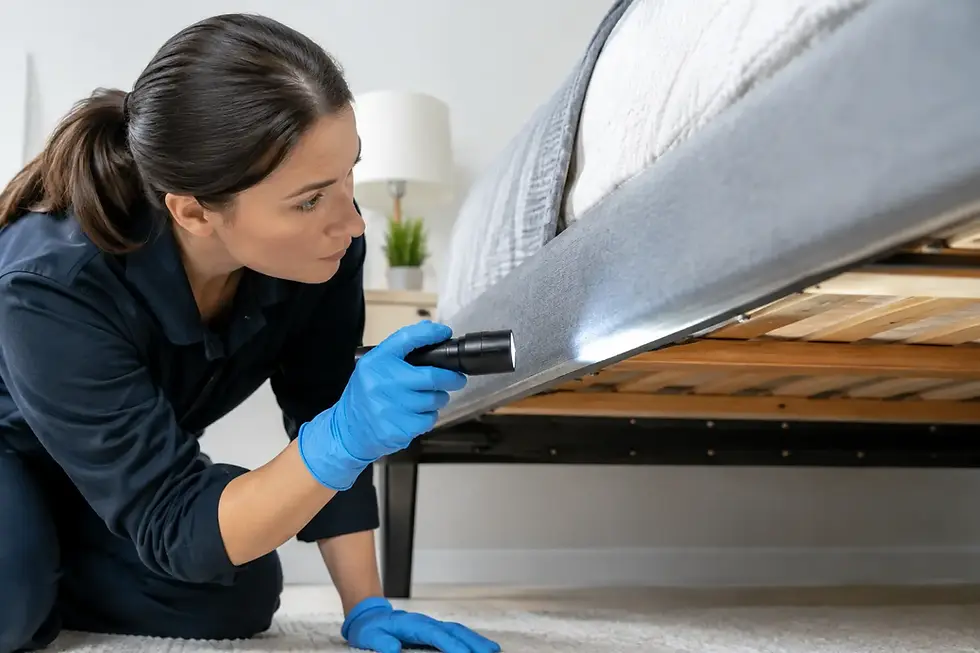
Do not assume every bite is caused by fleas. Bed bugs, mites and skin reactions can look similar at first. Fleas are more likely where pets are present, where bites are concentrated around the legs, or where activity increases after a pet has rested on a rug, sofa or bed. A professional inspection is worthwhile when the source is unclear, particularly in rental properties, hotels and multi-occupancy buildings where a wrong diagnosis wastes valuable time.
How to remove fleas indoors: treat the source first
If a dog or cat is carrying fleas, treating the building without treating the animal will not solve the infestation. Speak to a vet or qualified pet-care professional about a suitable flea-control product for the species, age, weight and health of every pet in the household. Never use a product intended for dogs on cats. Some ingredients that are safe for dogs can be extremely dangerous to cats.
Treat all pets at the same time, even if only one is scratching. Continue as directed for the full recommended period. Wildlife can also sustain a problem. Foxes, rodents, nesting birds or feral cats near a property may introduce fleas or provide an outdoor reservoir, so check lofts, underfloor voids, sheds and access points where relevant.
For a property with no pets, think about recent visitors, previous tenants, second-hand furniture or wildlife access. Fleas can be brought inside on animals, but they do not need a pet to bite humans temporarily once they have emerged indoors.
Remove eggs, larvae and flea dirt from the environment
Cleaning is not a cosmetic step. It removes material that supports the immature stages of the flea life cycle. Larvae avoid light and feed in protected areas on organic debris, including flea dirt. Your cleaning programme should be focused, repeated and thorough.
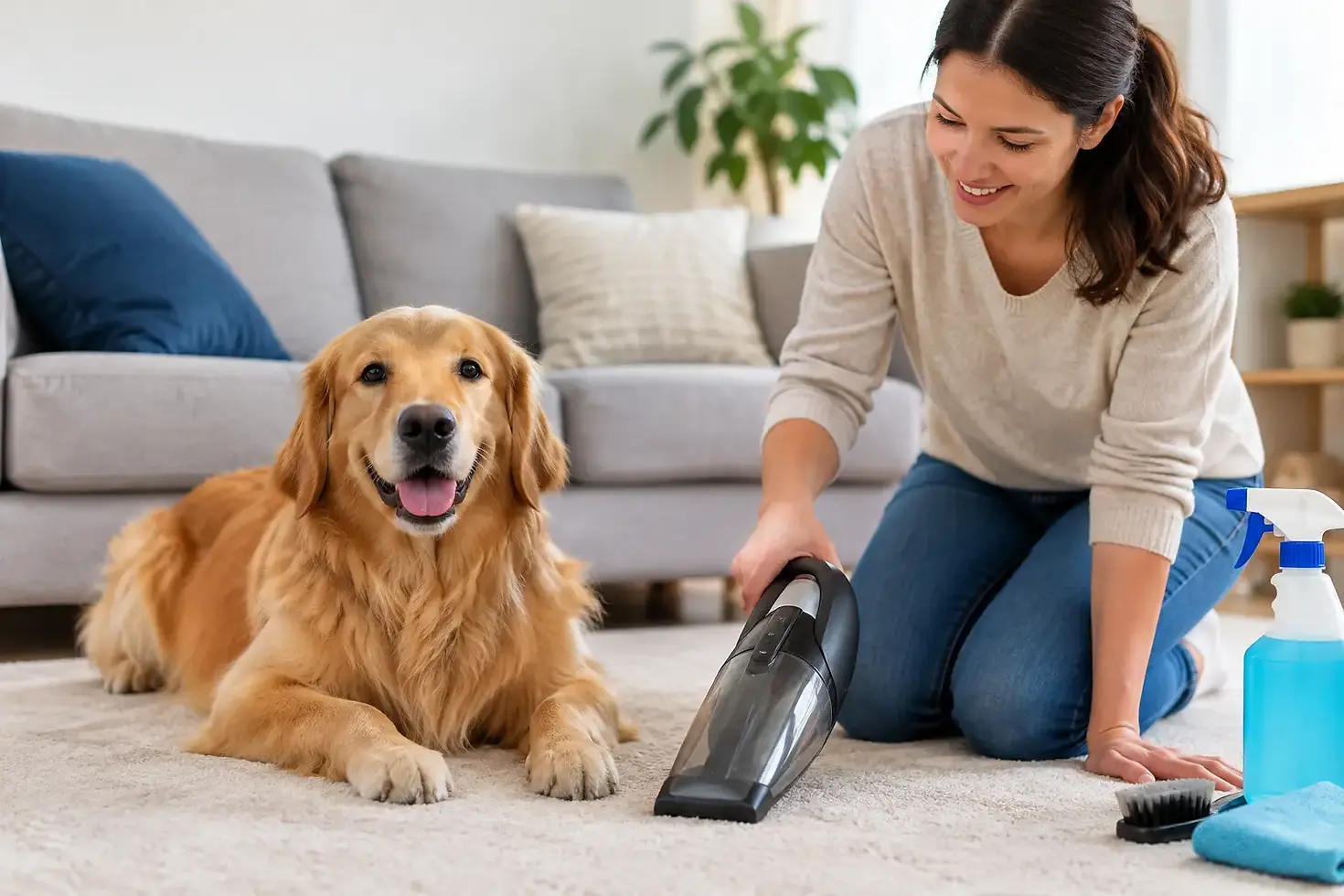
Vacuum carpets, rugs, upholstered furniture, mattress edges, pet sleeping areas, cracks near skirting boards and beneath beds, sofas and radiators. Use a crevice tool around floor edges and furniture feet. Empty the vacuum outside immediately afterwards, sealing the contents in a bag before placing it in an external bin. If your vacuum has a bag, remove and discard it after use.
Wash pet bedding, throws, washable cushion covers and bedding that pets have accessed at the highest temperature permitted by the care label. A hot wash followed by a hot tumble dry, where suitable for the fabric, is particularly useful. Do not overlook the car if pets travel in it, or communal areas where an infested pet may have rested.
Vacuum daily for the first week where practical, then several times a week for the following weeks. The movement and vibration can encourage adult fleas to emerge from pupae, making them easier to remove or target. It is labour-intensive, but it is one of the reasons a proper flea programme performs better than a single treatment day.
Understand why one-off sprays often disappoint
Many over-the-counter flea products kill exposed adults but do not reliably penetrate every harbourage or affect pupae inside their protective cocoon. Eggs and larvae may also be missed if the application is uneven, if furniture is not moved or if the product is used incorrectly. Overuse creates another problem: unnecessary chemical exposure in rooms where children, pets and vulnerable occupants spend time.
Foggers are a common example. They release product into open air, yet fleas and their immature stages are often deep in carpet fibres, beneath furniture and at floor-wall junctions. A fogger may give the impression of action without delivering controlled coverage where it is needed most.
Chemical treatment can have a role in some circumstances, but it depends on the infestation level, property layout, occupancy and the product being used. It must be carried out safely and in line with instructions. If bites continue after a careful cleaning and pet-treatment programme, repeated DIY spraying is usually not the answer.
When professional heat treatment is the right option
A heavy, established or recurring flea infestation needs a treatment method designed to reach beyond visible insects. Professional heat treatment is a chemical-free option that raises the temperature of the affected environment to lethal levels for fleas at all life stages, including eggs. The objective is not simply to make the room feel hot. It is to achieve and maintain controlled temperatures throughout the treatment zone for a defined period.
This is where specialist process matters. Industrial heat equipment is positioned to circulate heated air through the room, while WiFi-monitored sensors track temperatures across the treatment area. Cold spots behind furniture, within dense textiles and around structural features must be identified and managed. Thermal imaging and handheld high-temperature equipment can then be used to target difficult areas and likely migration routes.
At Extreme Heat Treatments UK, this is a measured operation rather than a guesswork exercise. The treatment team monitors the environment throughout the process, moves air strategically and verifies that the required conditions have been achieved. For occupied homes, flats, hotels and sensitive areas such as nurseries, the appeal is clear: no residual insecticide coating on carpets, sofas or bedding.
Heat treatment is not appropriate for every item without preparation. Candles, aerosol cans, plants, heat-sensitive belongings, pets and people must be removed, while certain possessions may need to be relocated or protected. A competent provider will give clear preparation instructions and inspect the space before treatment rather than promising a generic solution.
Prevent fleas from returning after treatment
After fleas have been removed, prevention is mostly about stopping a fresh introduction. Keep pets on the treatment schedule recommended by your vet, particularly during warmer months when flea activity can increase. Wash pet bedding regularly and continue routine vacuuming in favoured sleeping areas.
If you have recently moved into a property, clean carpets, upholstery and pet-accessible spaces before allowing animals to settle in. Landlords and property managers should act quickly when tenants report bites or flea activity. Delays allow the life cycle to continue and can turn a contained issue into a wider complaint across a building.
For hospitality premises, record where activity was reported, inspect adjoining rooms and avoid treating only the room where the first bite occurred. Fleas can be transferred through luggage, laundry, soft furnishings and animal access. A discreet, documented response protects guests and reduces operational disruption.
What to expect after a flea treatment
Seeing an occasional flea shortly after intervention does not always mean treatment has failed. Pupae can emerge later, especially if an incomplete DIY programme was used beforehand. What matters is whether there is ongoing biting activity, fresh flea dirt, pet discomfort or repeated sightings over time.
Keep a simple record for one to two weeks: note where bites occur, which rooms are affected and whether pets are still scratching. This gives a professional a far clearer picture than a general report that fleas are "still everywhere". It also helps distinguish residual activity from a new introduction.
The fastest route to a flea-free property is controlled action, not stronger and stronger sprays. Treat the host, remove the developing stages from the environment and use professionally monitored heat when the infestation demands complete, chemical-free eradication. Fleas are persistent, but a properly managed treatment plan gives them nowhere left to develop.


Comments