


How to Protect Hotel Rooms From Bed Bugs

A single unexplained bite, a dark mark on a mattress seam or a guest complaint can put a hotel room out of service immediately. Knowing how to protect hotel rooms from bed bugs is therefore not just a housekeeping issue. It is a matter of guest confidence, revenue protection and preventing a contained incident from becoming a building-wide infestation.
Bed bugs do not appear because a hotel is unclean. They are introduced by people and luggage, then exploit the very conditions that make bedrooms comfortable: upholstered furniture, beds, curtains, skirting boards and frequent guest turnover. The correct response is not to panic or spray a room blindly. It is to detect early, contain movement and use a treatment method capable of reaching insects and eggs wherever they are hiding.
How to protect hotel rooms through prevention
Prevention begins with a routine that works on a busy changeover day, not an idealised checklist that staff cannot realistically complete. Housekeepers are usually the first people with an opportunity to see evidence, so they need clear indicators and a simple reporting route.
During room servicing, inspect mattress piping, labels and seams, the bed base, headboard fixings, bedside furniture and the joins of chairs or sofas. Look for live insects, pale shed skins, tiny white eggs and black spotting. Bed bugs favour tight, protected gaps. A quick glance across open bedding will not find an early infestation.
The bed should be positioned so staff can inspect around it without unnecessarily dismantling furniture every day. Encasements designed for commercial mattresses and divans can reduce accessible harbourage and make evidence easier to spot. They are useful management tools, but they are not a treatment. An encasement fitted over an already infested bed can trap some insects while leaving others active in the frame, headboard or surrounding room.
Luggage racks deserve attention. Guests should have a clear, practical place to keep cases away from beds and upholstered seating. In staff areas, avoid storing found property, used linen, guest luggage or removed furnishings against clean stock or beside sleeping accommodation. Bed bugs spread by hitchhiking. A sound prevention plan reduces opportunities for that movement.
Train staff to report, not diagnose
Staff do not need to identify every insect with certainty. They do need to know that suspected evidence must be reported immediately and discreetly. Delays are expensive. A member of staff who worries about making a false alarm may say nothing, allowing a small issue to develop across neighbouring rooms.
Give reception, housekeeping, maintenance and management one agreed procedure. Record the room number, date, evidence found, guest feedback and any rooms used immediately before or after. Keep a physical sample in a sealed container where possible, rather than relying solely on a photograph. A professional inspection can then confirm the species and define the treatment area.
Avoid moving mattresses, chairs, linen bags or loose items from a suspected room through public corridors unless they are sealed and handled under instruction. Removing items without containment can relocate the problem rather than remove it.
Contain a suspected bed bug room correctly
Taking a room out of sale is often the right decision, but closure alone does not stop bed bugs. They can remain concealed for long periods and may migrate through gaps around pipework, electrical points, wall junctions and adjoining furniture. The room beside, above and below may require inspection depending on the layout, length of the suspected activity and evidence found.
Do not transfer guests into another room using the same potentially affected luggage trolley or place removed soft furnishings in storage. Bag linen before it leaves the room, label it clearly and direct it through a controlled laundry process. Heat from correctly managed washing and drying is valuable, but laundry must not become the route by which insects are carried through the premises.
Vacuuming can remove visible insects and debris, particularly around bed frames and floor edges, but it is not a complete eradication method. Vacuum bags or contents must be sealed and disposed of safely. Similarly, over-the-counter aerosols may disturb insects into deeper harbourages and create a false impression that the problem has gone. They do not reliably deal with eggs hidden beyond the spray line.
Protect hotel rooms with a planned inspection programme
Hotels with regular turnover should not wait for a complaint before looking. A planned inspection programme focuses effort where the risk is greatest: rooms with frequent occupancy, upholstered communal seating, luggage storage areas, staff rest spaces and rooms connected to a confirmed case.
Keep accurate room histories. If reports repeatedly occur in the same zone, that pattern may point to migration routes, a furnishing issue or an incomplete earlier treatment. Maintenance teams should also seal cracks around skirting, damaged wallpaper, loose headboards and service penetrations where practical. This does not eradicate bed bugs, but it reduces harbourage and makes future inspections more effective.
Monitoring devices can support an inspection strategy, especially in higher-risk rooms, but they should be interpreted by trained people. A clear monitor does not prove a room is free from bed bugs, and a positive monitor demands a structured response rather than an isolated spray. Evidence, room history and adjacent-room checks must be considered together.
Why professional heat treatment is different
When bed bugs are confirmed, the treatment objective is complete eradication of all life stages, including eggs. This is where professional heat treatment has a major advantage over surface-only insecticide applications. Bed bugs are increasingly resistant to many commonly used chemicals, and insecticide may not reach insects hidden inside furniture, wall voids or complex bed structures.
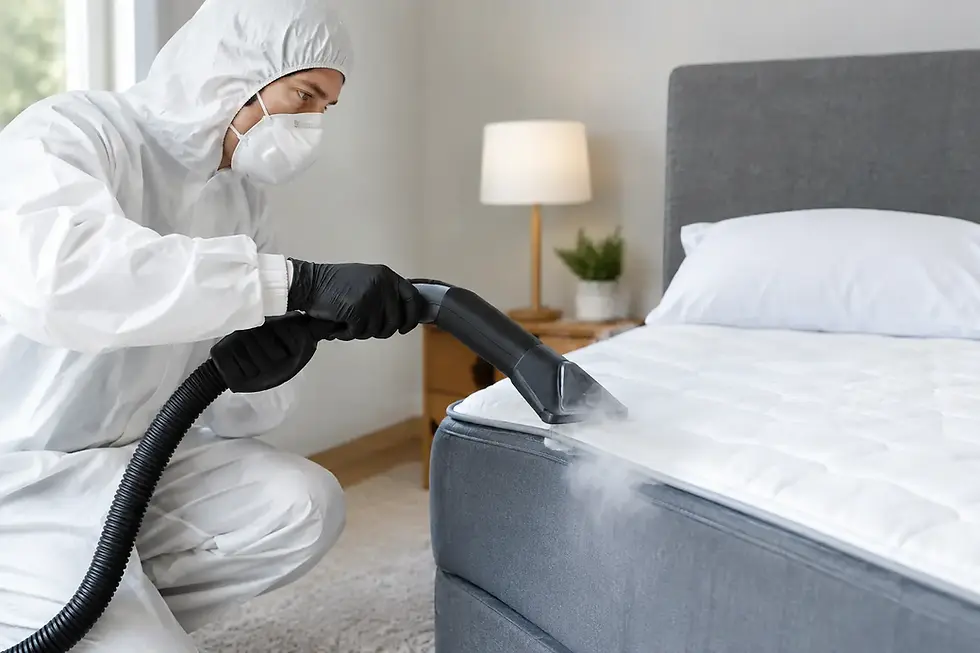
A specialist heat treatment raises the temperature of the room and its contents to a lethal level for a sustained period. It is not simply a matter of placing heaters in a room and leaving them running. Heat must be controlled, measured and circulated so that it reaches the difficult areas where bed bugs survive.
At Extreme Heat Treatments UK, industrial heat machines are deployed with WiFi-monitored sensors to track temperatures throughout the treatment space. Thermal imaging helps identify cold spots, while handheld high-temperature equipment can target migration zones, furniture joints and areas that need additional attention. The team does not guess, it monitors.
This precision matters in hotel environments. Thick mattresses, divan bases, wardrobes, dense upholstery and external walls can all affect how heat moves through a room. A treatment that reaches the target temperature in the centre of the room but leaves cooler pockets around the bed frame is not sufficient. Sustained, monitored exposure is what makes chemical-free heat treatment capable of treating live bed bugs and eggs in a single visit.
Heat is not appropriate for every unprepared room. Items sensitive to high temperatures must be identified and managed before treatment, and the operator needs to assess the room construction, contents and adjoining spaces. A reputable specialist will provide preparation instructions, inspect the affected area and explain what needs to happen before equipment is installed.
Protect the guest experience as well as the building
A bed bug incident is sensitive, but silence and inconsistency can make it worse. Staff should know how to respond calmly to a guest who raises a concern: listen, avoid dismissing the report, record the details and escalate it to a manager immediately. Do not make promises about the cause before an inspection has taken place.
Operationally, hotels need a decision-maker who can close rooms, authorise inspections and coordinate housekeeping, maintenance and laundry. The longer a suspected room stays in limbo, the more likely it is that unsuitable cleaning or unnecessary movement of furnishings will occur.
Guest-facing communication should be factual and proportionate. Protecting privacy is essential, but so is showing that the hotel takes hygiene and welfare seriously. A prompt, professional response often protects reputation better than a defensive one.
The standard that prevents repeat incidents
The strongest hotel bed bug policy is not based on one product or one inspection. It combines trained staff, controlled linen handling, fast reporting, targeted inspections, room containment and a treatment method that addresses the full infestation rather than the insects that happen to be visible.
For hotels, hostels and serviced accommodation, certainty is worth more than a short-term fix. When a suspected room is dealt with methodically, evidence is recorded and heat is monitored through every potential cold spot, the building is protected with far less disruption and far greater confidence.


Comments