


Bedbug Prevention Guide for Homes and Hotels

A suitcase placed on a hotel luggage rack, a second-hand bedside cabinet carried into a flat, or a visitor’s bag left beside a bed can be enough to introduce bed bugs. This bedbug prevention guide sets out where the real risks sit, what practical controls work, and when prevention must give way to a professional response.
Bed bugs are not attracted by dirt, and a clean property is not immune. They travel by hitchhiking in luggage, clothing, furniture and soft furnishings, then settle close to a reliable food source. Their ability to hide in narrow cracks, remain unnoticed and spread between neighbouring rooms makes early action far more valuable than panic cleaning after the fact.
Start with the routes bed bugs use
Prevention works best when it is based on how bed bugs actually move. In private homes, travel and brought-in items are the principal routes. In blocks of flats, bedsits and shared houses, bugs can also move through wall voids, pipe runs, electrical points and gaps around skirting boards. A problem in one room may therefore be a building-management issue rather than an isolated bedroom issue.
Hotels, hostels and short-stay accommodation face a different operational risk. High guest turnover creates repeated opportunities for bed bugs to arrive in luggage. One missed report, one untreated room or one piece of infested laundry can allow the issue to develop into a reputational and commercial problem.
This does not mean refusing every used item or treating every traveller as a risk. It means putting proportionate controls in place where bugs are most likely to be introduced, hidden or transferred.
A bedbug prevention guide for travel and returning home
When staying away, use the luggage rack if one is available and keep it away from the bed and upholstered seating. Avoid placing an open suitcase on the bed, floor beside it, or inside drawers. Before unpacking, inspect the mattress seams, headboard joints and the area where the bed meets the wall. You are looking for live insects, pale shed skins, tiny white eggs or small dark spotting around harbourage points.
Do not assume an apparently clean room is clear. Bed bugs are skilled at remaining out of sight during daylight hours. Equally, do not mistake every dark mark for evidence. A trained inspection considers the pattern, location and physical signs rather than relying on one suspicious speck.
On returning home, unpack luggage away from bedrooms where practical. Wash travel clothing at the highest temperature permitted by the care label, then dry it thoroughly if the fabric allows. Inspect suitcase seams, pockets, handles and the base before storing it. Vacuuming luggage can remove loose debris, but it is not a guaranteed control for insects or eggs concealed deep within stitching and folds.
If you believe you stayed in an affected room, do not move bags from room to room while deciding what to do. Keep potentially exposed items contained and seek professional advice promptly. The aim is to stop a possible introduction becoming a dispersed infestation.
Control second-hand furniture before it enters
Second-hand furniture is often excellent value, but beds, sofas, upholstered chairs, mattresses, divan bases and bedside units demand a close inspection. Check joints, screw holes, drawer runners, underside fabric, labels, piping and cracks in timber. Bed bugs favour protected gaps close to where people rest, but they can be transported in almost any item with seams or voids.
Avoid collecting discarded mattresses or upholstered furniture from the street. Do not bring an item straight into a bedroom simply because no insects are immediately visible. Eggs are small, and early-stage nymphs can be difficult to identify without experience.
For landlords and property managers, a documented inspection process between tenancies is sensible. Inspect beds, mattresses, bed frames, sofas and curtains, particularly after reports of bites, guest turnover or a previous infestation. Simply changing linen and carrying out a quick visual check is not enough where signs are present.
Reduce harbourage without turning your home upside down
Bed bugs exploit clutter because it gives them more places to hide and makes inspection slower. Reducing clutter around sleeping areas is useful, but throwing possessions away indiscriminately is not. Moving potentially infested belongings through hallways, communal areas or other bedrooms can spread the problem.
Keep the area beneath and around beds clear enough to inspect. Repair loose wallpaper, damaged skirting and cracked bed frames where possible. Fit mattress and base encasements designed for bed bug control if appropriate. These can remove hiding places and make future inspections easier, but they do not eradicate an established infestation elsewhere in the room.
Bed interceptors beneath bed legs can assist monitoring in some settings. They are most effective when the bed is positioned away from walls and bedding does not touch the floor. They are a detection tool, not a substitute for treatment. If bugs are already hiding in the bed, headboard or surrounding furniture, interceptors alone will not solve the problem.
Inspect early, then record what you find
Bites can be irritating, but they are not reliable proof of bed bugs. Skin reactions vary widely and can have many causes. Better evidence includes live insects, cast skins, eggs, dark faecal spotting and reports that are consistent across a room or property.
If you find a suspected specimen, contain it in a sealed clear container or take a sharp photograph beside an object for scale. Record the room, date and exact location. For hotels and managed properties, maintain a clear log of guest reports, inspection findings, room closures and actions taken. This makes it easier to identify repeat patterns and prevents assumptions replacing evidence.
A focused inspection should examine the mattress piping, bed frame joints, headboard, divan structure, nearby furniture, curtain headings, skirting, sockets and cracks around the bed area. In more developed cases, insects may be found further from the bed, including sofas, luggage areas and adjacent rooms.
Why sprays and home remedies often create a larger problem
Aerosol insecticides, foggers and improvised chemical treatments can drive bed bugs deeper into voids or into neighbouring rooms without killing the whole population. Resistance to commonly used insecticides is also a serious issue. A treatment that kills a few exposed insects may leave hidden adults and eggs untouched.
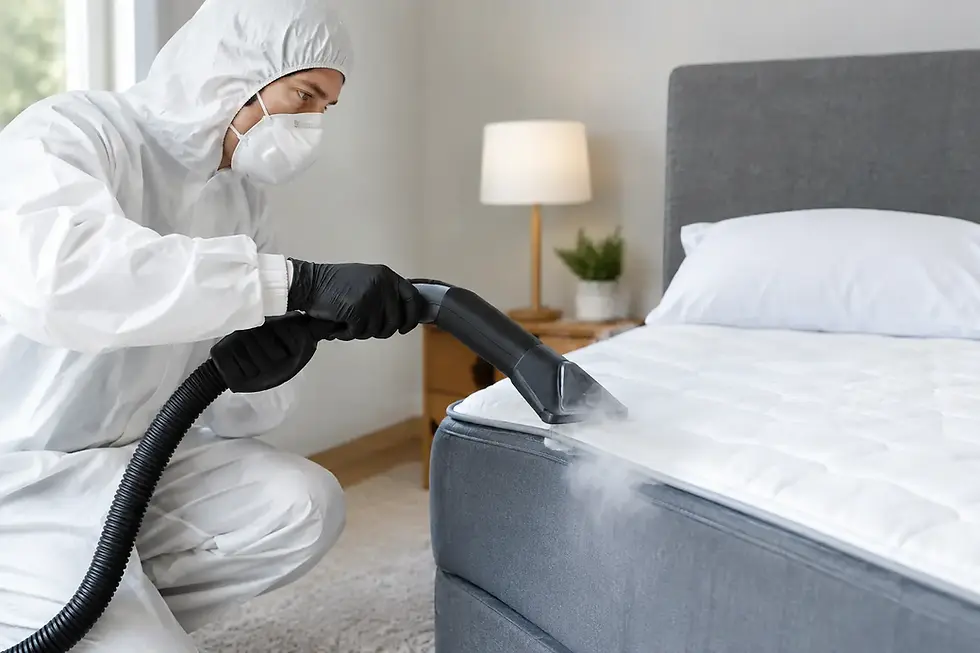
Steam can kill bed bugs on direct contact when used correctly, but it has limits. It must reach the insects at sufficient temperature and exposure, while avoiding moisture damage and missed areas. Vacuuming, laundering and careful containment all have a place in prevention and preparation, but none should be presented as a guaranteed cure for an established infestation.
The trade-off is straightforward: do-it-yourself action may feel immediate, but poorly targeted action often delays decisive control. If signs are confirmed, avoid moving rooms to sleep elsewhere, avoid donating furniture, and avoid taking belongings to friends or family. Containment and a structured treatment plan are safer than repeated experiments.
When professional heat treatment is the right response
Professional intervention is warranted when bed bugs are found, signs persist after basic controls, bites or reports are recurring, or the property has multiple rooms or units at risk. It is particularly important in hotels, shared housing and blocks of flats, where migration routes can undermine a room-by-room approach.
A specialist heat treatment is not simply heating a room and hoping for the best. Effective work requires controlled temperatures maintained for a sustained period, with sensors positioned to monitor conditions throughout the treatment area. Cold spots behind furniture, inside voids and around dense contents must be identified and addressed. Handheld high-temperature equipment can be used on migration zones and difficult harbourage points.
At Extreme Heat Treatments UK, the approach is precision-led: temperatures are monitored remotely, thermal imaging helps identify cold areas, and the treatment plan is built around the layout and risk points of the property. This chemical-free method is designed to target live bed bugs and eggs in a single visit, with a 100% guarantee.
Preparation still matters. Occupants may need to remove heat-sensitive items, follow instructions on laundry and access, and avoid taking untreated belongings away from the site. A competent provider will explain exactly what is required rather than issuing vague instructions.
Prevention after treatment is an operational habit
After a confirmed infestation has been eradicated, retain the controls that made early detection possible. Inspect accommodation after high-turnover stays, keep a simple reporting route for tenants, staff or guests, and respond to credible evidence on the day it is reported. In managed properties, review adjoining rooms and likely movement routes rather than treating every report as an isolated complaint.
The most effective prevention is not fear of travel, visitors or second-hand furniture. It is knowing where bed bugs gain access, refusing to spread a suspected problem, and acting with evidence and control before a small introduction becomes established.


Comments