

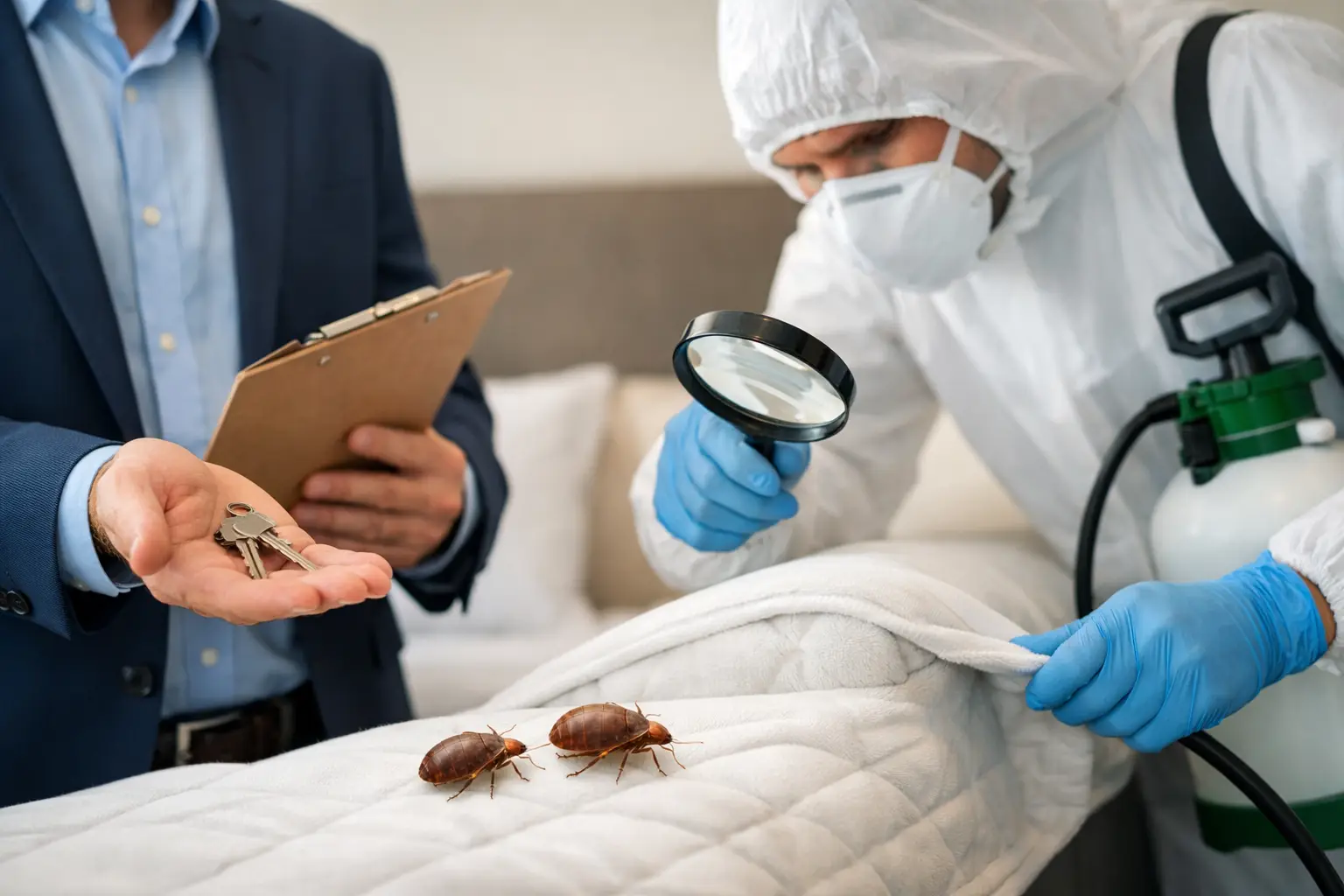
Landlord Bed Bug Treatment Responsibility

A tenant reports bites, spots on the mattress and live insects in the bed frame. Within hours, the question stops being theoretical. Landlord bed bug treatment responsibility becomes urgent, because delays allow an infestation to spread into skirting voids, adjoining rooms and neighbouring flats.
The difficult part is that there is no single answer that fits every property. Responsibility can depend on how the infestation started, what the tenancy agreement says, whether the landlord acted promptly, and whether there is evidence that bed bugs were present before the tenant moved in. In blocks of flats, shared buildings and HMOs, it can become even more complex because the source may not be limited to one room or one occupier.
What landlord bed bug treatment responsibility usually means
In practical terms, responsibility has two separate parts. The first is legal and contractual responsibility for arranging treatment and paying for it. The second is operational responsibility for making sure the infestation is actually eradicated.
Those two things do not always sit neatly together. A landlord may dispute how the infestation began, but still need to act quickly to prevent the problem worsening and affecting other units. A tenant may believe the landlord should pay, but still need to co-operate fully with inspection access, laundering, room preparation and follow-up advice.
That is why bed bug cases should be handled on evidence, not assumptions. Bed bugs do not appear because a property is dirty. They are usually introduced through luggage, furniture, visitors or migration from another affected room or neighbouring premises. In a multi-occupancy building, proving origin is not always straightforward.
When a landlord is likely to be responsible
If there is evidence that bed bugs were already present before the tenancy started, responsibility will usually sit with the landlord or managing agent. That might include complaints from a previous tenant, treatment records, visible signs found immediately after move-in, or known issues in adjoining units.
A landlord is also more likely to carry responsibility where the infestation relates to the condition or structure of the building. In blocks and converted houses, bed bugs can travel through cracks, service routes, wall voids and shared furnishing arrangements. If one tenant is affected because the wider building has not been managed properly, it is difficult to argue that the matter sits only with the individual occupier.
There is also the issue of response. Even where liability is not immediately clear, landlords are expected to take reports seriously. Ignoring early signs, postponing inspection or relying on guesswork can turn a contained infestation into a wider property problem. Once bed bugs spread, treatment becomes more disruptive, more expensive and more contentious.
When the tenant may be responsible
If there is clear evidence that the infestation was introduced during the tenancy, the tenant may be expected to cover treatment costs. That could apply where bed bugs appear long after move-in with no prior history, particularly if there is a plausible introduction route such as recently acquired second-hand furniture, frequent travel, or a known localised source within the tenant's belongings.
Even then, certainty matters. Bed bugs are highly mobile. In terraced properties, flats and HMOs, an infestation that looks local can still be migrating from elsewhere. A rushed conclusion can leave the true source untreated, which is why one-room spray approaches often fail.
Tenants can also create practical difficulties if they delay reporting, attempt repeated DIY treatment, or refuse access. Over-the-counter products rarely resolve established infestations and can scatter bed bugs deeper into the room or into adjacent areas. Once the insects are pushed into hiding, proper eradication becomes more technically demanding.
Why tenancy agreements matter - but do not settle everything
Many tenancy agreements include clauses about pest control, cleanliness and tenant conduct. These clauses matter, but they are not a shortcut to the right answer in every case. A clause saying tenants must deal with pests does not automatically override the landlord's wider duties, especially if there is evidence of a pre-existing issue or a structural route of spread.
Equally, a landlord cannot simply absorb the cost and hope that solves the argument if the actual cause points elsewhere. If the infestation was introduced by the tenant but not eradicated properly, the landlord may still face complaints from future occupiers, neighbouring units or the local authority.
The sensible approach is to treat first based on risk, then resolve the cost question on evidence if needed. That protects the asset, protects other occupiers and avoids the false economy of delay.
Evidence that helps establish bed bug treatment responsibility
The strongest cases are built on timing, inspection findings and records. If a tenant reports bed bugs within days of moving in, that carries weight. If there are photographs, earlier complaints, contractor notes, or signs in multiple units, that also strengthens the picture.
Professional inspection is often the turning point. Bed bugs leave patterns - harbourage in bed frames, spotting around seams, cast skins near sleeping areas, and activity in soft furnishings, sockets, cracks and migration routes. An experienced specialist is not just looking for insects. They are assessing spread, age of activity, likely harbourage and whether the infestation appears established or recently introduced.
That distinction matters because it affects both liability and treatment design. A light, recent infestation in one bedroom is very different from a mature problem that has spread through furniture, floor junctions and adjoining rooms.
The treatment method affects the outcome
This is where many disputes become more expensive than they need to be. Landlords and agents often focus first on who should pay, when they should be asking whether the treatment plan is capable of eliminating bed bugs in one controlled operation.
Spray-led treatment can have a place, but bed bugs are increasingly difficult to control with chemicals alone. Resistance is a real operational issue, and eggs are especially problematic if the treatment is not reaching all harbourage points. Partial treatment or low-accuracy application often leads to recurrence, repeat visits and further disputes about whether the first contractor actually solved the problem.
Specialist heat treatment changes that equation because it is designed to eliminate both live bed bugs and eggs by raising target areas to lethal temperatures for a sustained period. The method only works properly when it is controlled properly. That means industrial heat equipment, measured heat distribution, remote sensor monitoring, thermal checks for cold spots and targeted treatment of harder migration zones.
We do not guess, we monitor. In bed bug work, that level of control matters because untreated cool pockets can allow survival. Precision-led heat treatment is often the clearest route when a landlord needs fast eradication, minimal chemical use and confidence that the infestation has been addressed thoroughly.
Bed bugs in flats, HMOs and hotels
Landlord bed bug treatment responsibility becomes more complex in buildings with shared walls, communal spaces or frequent occupant turnover. In these settings, treating one room in isolation is often not enough. If bed bugs are moving between units, a narrow treatment area can leave a live reservoir next door.
For landlords, letting agents and hospitality operators, this is not just a cost issue. It is a reputational and operational one. Delays can lead to complaints, void periods, refund demands and escalating treatment requirements. The faster the response, the more contained the problem usually is.
That is why competent inspection should always look beyond the first visible room. Bed bugs follow hosts, but they also exploit structure. A proper assessment considers adjacent bedrooms, lounge furniture, service penetrations, floor edges and neighbouring occupancy patterns.
What landlords and tenants should do immediately
The first step is to stop guessing. Report the issue in writing, record signs clearly and arrange a professional inspection without delay. Do not throw furniture out prematurely and do not rely on supermarket aerosols to settle a building-wide problem.
Landlords should keep records of reports, previous infestations, contractor findings and communications. Tenants should provide honest timelines, co-operate with access and avoid moving infested items around the property. Both sides should focus on eradication first, especially where adjoining rooms or units may be at risk.
If the infestation is confirmed, the treatment scope should match the reality on site. That may mean one room, several rooms or a wider building response. A cheap first attempt that misses eggs, cold spots or migration routes often costs more than a decisive specialist treatment carried out properly.
For UK landlords, agents and tenants, the most reliable position is simple. Responsibility depends on evidence, but speed matters more than argument in the first instance. Bed bugs do not wait for liability to be settled, and neither should the response. A clear inspection, a technically sound treatment plan and firm co-operation from everyone involved will usually protect both the property and the people living in it.
When bed bugs are active, the smartest move is not to debate them into submission. It is to deal with them properly, before one room becomes a building problem.


Comments