


Best Chemical Free Pest Control Methods That Work
- Extreme Bedbug Heat Treatments
- 1 day ago
- 5 min read

A bed bug found on a mattress seam, flea bites appearing after the pets have been treated, or moth damage in stored textiles all create the same urgent question: how do you stop the infestation without filling the property with insecticide? The best chemical free pest control methods are not a single product or household trick. They are a controlled programme that removes the pest, its eggs, its food source and its routes back into the property.
For minor, isolated problems, careful cleaning, proofing and monitoring may be enough. For established insect infestations, particularly bed bugs, a professional heat treatment is usually the most reliable chemical-free route. The right approach depends on the species, the scale of activity and the building itself. We do not guess, we inspect, monitor and treat the conditions that allow pests to survive.
Why chemical-free control needs a planned approach
Chemical-free does not mean passive. It means using physical, environmental and mechanical controls rather than relying on residual sprays. These methods can be highly effective, but only when every life stage and hiding area is considered.
Bed bugs are the clearest example. They hide in bed frames, headboards, sockets, skirting gaps, upholstered furniture and luggage. Eggs can remain concealed in seams and cracks that a quick clean will never reach. Fleas develop through several life stages, with immature stages protected in carpets, floorboard gaps and soft furnishings. Clothes moth larvae may be deep within natural-fibre textiles, under furniture or in rarely disturbed storage areas.
A treatment that only removes visible insects can create a false sense of security. The objective is eradication, not a temporary reduction in sightings. That requires correct identification, access to harbourage points and a method proven to reach eggs as well as live insects.
The best chemical free pest control methods for a property
Proofing and exclusion
Stopping access is often the most cost-effective control measure. Mice, rats, wasps and crawling insects exploit small gaps around pipework, air bricks, doors, damaged mortar and service entries. Sealing those routes, fitting door brushes and repairing screens reduces the chance of a repeat problem once existing activity is removed.
Proofing is especially valuable for landlords, managing agents and commercial premises where several adjoining units can create multiple access routes. However, it is not an eradication method for bed bugs, fleas or moths already established inside. These insects are usually introduced through people, belongings, pets or infested items, rather than entering from outside gaps.
Deep cleaning, laundering and targeted disposal
High-temperature washing and tumble drying are useful physical controls for washable bedding, clothing and fabrics. Bag items before moving them through the property, then use the manufacturer-approved hottest wash and drying cycle the materials can safely tolerate. This reduces the risk of carrying insects from one room to another.
Thorough vacuuming can remove some live insects, larvae, eggs and food debris. Focus on mattress seams, bed frames, carpet edges, upholstery, drawers, wardrobes and cracks around flooring. Empty the vacuum outside immediately in a sealed bag. Steam can also kill insects on direct contact when applied correctly, but it has serious limitations: it is slow, may not penetrate deep harbourages and excess moisture can damage materials or encourage mould.
Disposal has a place when an item is badly damaged or cannot be treated effectively, but it should not be the default response. Throwing out a bed or sofa without wrapping it can spread the infestation through communal corridors, lifts or neighbouring rooms. A professional assessment can often save valuable furnishings.
Traps, monitors and pheromone control
Monitoring devices are useful because they turn suspicion into evidence. Interceptor-style traps beneath bed legs can help identify bed bug movement. Pheromone traps may assist with clothes moth monitoring and allow a property manager to see whether activity is increasing or declining. Sticky traps can reveal the presence and direction of crawling insects.
These tools are excellent for detection and post-treatment checking. They are rarely a complete answer to a developed infestation. A trap catches the insects that enter it, not every insect hidden behind a skirting board or beneath a carpet edge. Use monitoring to guide decisions, not as a substitute for treatment.
Heat treatment for insect infestations
Professional heat treatment is one of the strongest chemical-free options for bed bugs, moths, fleas and other heat-susceptible insects. The principle is straightforward, but successful delivery is technical. Industrial heaters raise the temperature of the treatment area to a lethal level and hold it there for a sustained period. Heat reaches insects wherever they are hiding, including eggs that may survive incomplete treatments.
The difference between a credible heat treatment and simply making a room hot is measurement. Heat naturally moves unevenly through a property. Dense furniture, external walls, cupboards, cluttered areas and voids can form cold spots where insects survive. A specialist team uses multiple WiFi-monitored sensors to track temperatures across the room in real time, rather than relying on a single reading near the heater.
Thermal imaging and physical inspections help identify problem areas during treatment. Technicians can then move air, reposition equipment or use handheld high-temperature tools to treat migration zones, bed frames, furniture joints and difficult harbourages. This is precision-led eradication: sustained, verified heat exposure rather than an assumption that the room was warm enough.
For a severe bed bug problem, this approach can offer a major practical benefit. A correctly planned treatment is normally completed in one visit, avoiding the repeated appointments and extended uncertainty often associated with spray programmes. At Extreme Heat Treatments UK, the process is managed around controlled temperatures, cold-spot detection and recorded monitoring, with eradication work backed by a 100% guarantee.
Where each method has limits
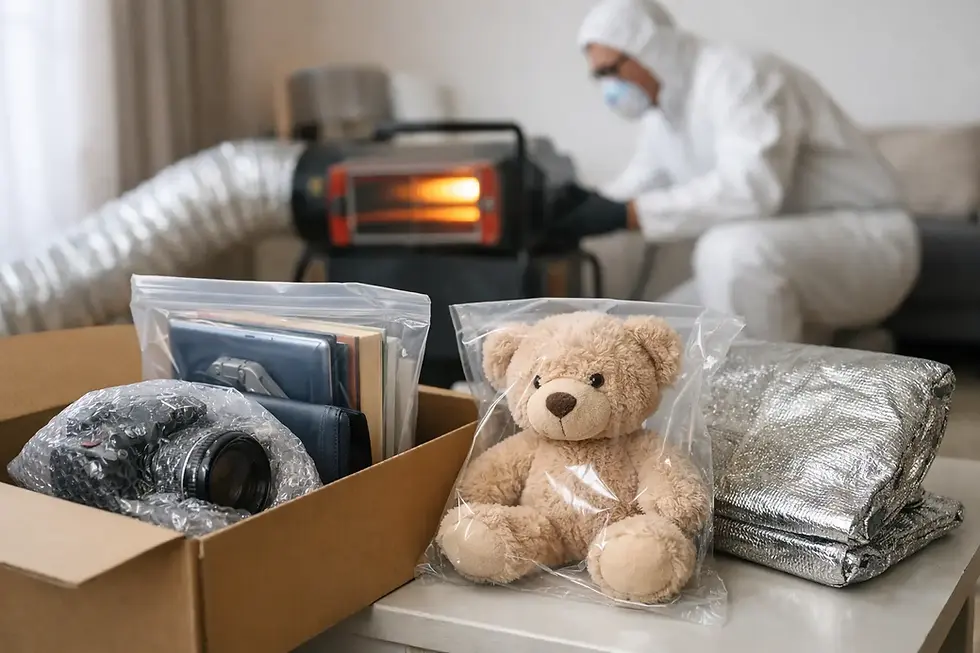
No responsible pest controller should claim that one solution suits every pest and building. Heat treatment requires preparation and professional control. Heat-sensitive possessions, medicines, candles, aerosols, plants and certain electronics may need to be removed or protected. The technician should provide a clear preparation plan before treatment begins.
Cleaning and laundering are useful, but they cannot reliably heat every concealed area in a furnished room. Steam is effective only where it contacts the target, and household devices often fail to maintain consistent lethal temperatures through thick fabrics or crevices. Traps provide valuable intelligence but do not address hidden populations. Proofing reduces future access but cannot remove eggs already indoors.
For rodents, non-toxic traps and proofing may be preferable to poison in homes with children, pets or sensitive environments, but trap placement and frequent checking are essential. For pantry pests, removing contaminated dry goods, cleaning cupboards and storing food in sealed containers can solve a small problem quickly. Correct identification always comes first, because the method must match the pest.
Choosing a chemical-free treatment provider
When an infestation is affecting bedrooms, guest accommodation, rented properties or shared buildings, ask how the provider verifies results. A vague promise to heat a room is not enough. You need to know how temperatures are monitored, how cold spots are identified, whether eggs are accounted for and what happens in difficult areas such as divan bases, wardrobes and wall junctions.
A competent specialist should inspect the property, explain the preparation requirements and set out the treatment plan in plain terms. They should also understand pest movement. Bed bugs may leave an untreated room when disturbed, so adjoining areas and migration routes need consideration. In hospitality settings, discretion, speed and minimal operational disruption are just as important as the method itself.
Prevention after eradication
Once treatment is complete, prevention is about reducing opportunities for reintroduction and finding activity early. Inspect second-hand furniture before bringing it indoors. After travel, keep luggage away from beds and check seams before unpacking. Store natural-fibre clothing clean and dry, particularly if it will be unused for a season. In blocks of flats and hotels, report suspected activity promptly rather than waiting for the problem to spread.
The most effective chemical-free pest control is not the cheapest gadget or the hottest household appliance. It is the method that reaches the actual pest, its eggs and its hiding places, then proves that the required conditions were achieved. When the stakes are high, measured professional heat treatment provides the certainty that a visible insect has gone for good, not simply gone quiet.


Comments