

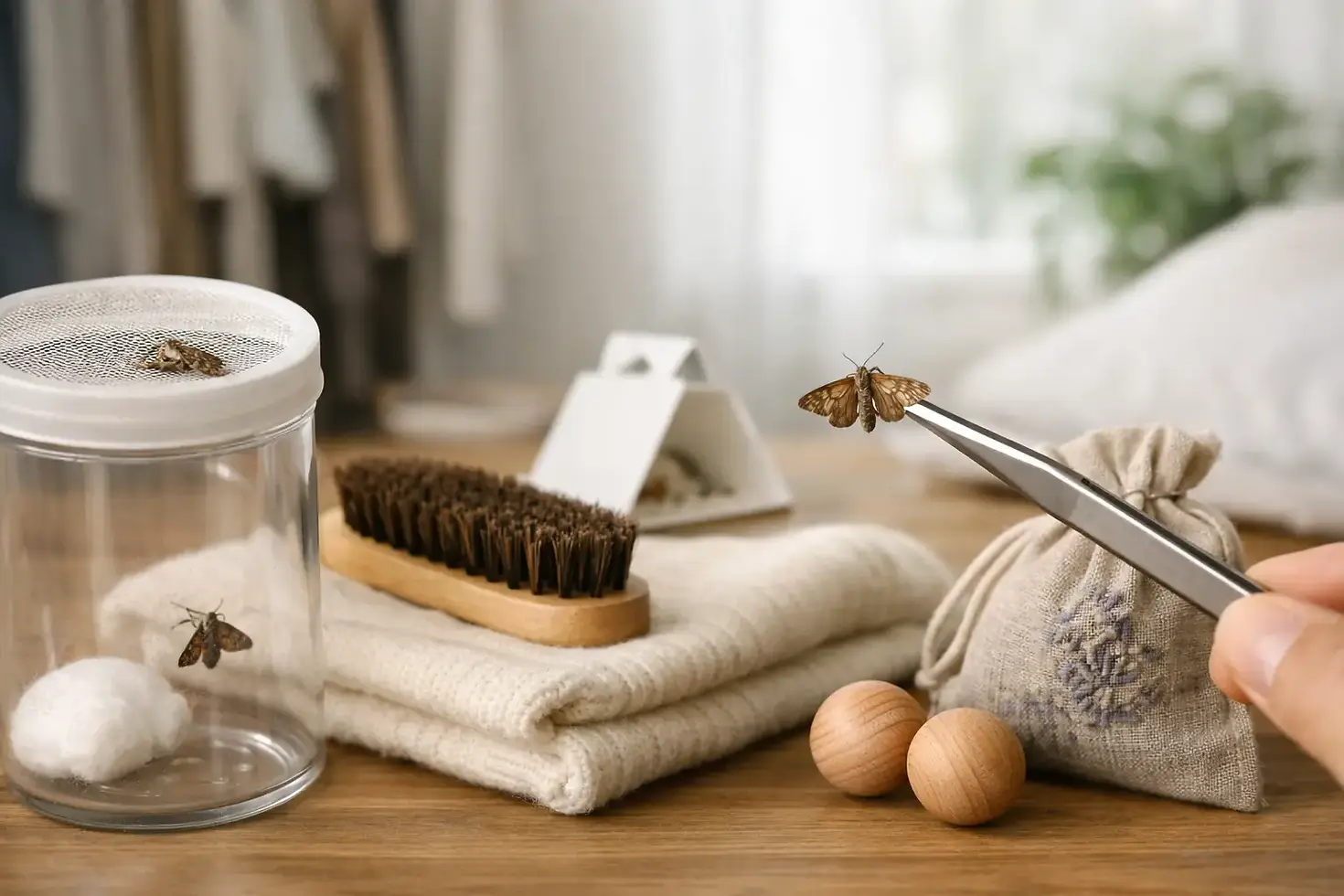
A Guide to Moth Removal Without Insecticides
- Extreme Bedbug Heat Treatments
- 12 minutes ago
- 6 min read

A moth flying from a wardrobe is rarely the full problem. Adult clothes moths do not create the damage - their larvae do, feeding quietly on natural fibres in dark, undisturbed areas. This guide to moth removal without insecticides explains what works, where DIY measures reach their limit, and why a controlled heat treatment can eliminate eggs, larvae and adult moths in one properly managed process.
First, identify the type of moth
The common clothes moth and case-bearing clothes moth are drawn to materials containing keratin. Wool, cashmere, silk, fur, feathers, leather trims and even dust or hair collected beneath furniture can provide a food source. You may see irregular holes in jumpers, thinning patches in rugs, shed larval cases, webbing or small cream-coloured larvae in wardrobe corners.
A pantry moth is different. It develops in dry food such as flour, cereals, nuts, pet food and dried fruit. Removing a pantry moth infestation means locating and disposing of contaminated food, then cleaning cupboards and storage containers thoroughly. Treating a wardrobe will not solve a kitchen infestation, and vice versa.
For clothes moths, focus your inspection on wardrobes, drawers, under-bed storage, upholstered furniture, rugs, curtains, loft-stored textiles and rarely disturbed clothes. The source is often closer than people expect.
Why insecticide-free moth removal needs a full plan
A spray may kill insects it directly reaches, but moth eggs and larvae are commonly hidden in seams, folds, carpet edges, furniture joints and the backs of wardrobes. Some larvae also move away from the original feeding area before pupating. This is why treating only the garment with visible holes often leads to repeat activity.
Chemical-free control relies on three things: removing accessible life stages and food sources, preventing surviving moths from spreading, and applying a treatment capable of reaching concealed areas. Cleaning matters, but cleaning alone is not always enough once an infestation is established.
The trade-off is straightforward. At-home methods can be highly useful for a small, contained problem, but they require careful handling of every affected item and ongoing checks. Professional heat treatment is a larger intervention, yet it treats the room and its contents as a controlled environment rather than asking you to find every egg by eye.
Start by containing the infestation
Do not move suspect clothing through the property uncovered. Put affected textiles into sealed bags before carrying them to a washing machine, freezer or separate treatment area. This reduces the chance of larvae or eggs being transferred to another bedroom, a hallway cupboard or a car.
Separate washable garments from delicate or non-washable items. Check clothing labels before using heat or water. A wool jumper may tolerate neither a hot wash nor a tumble dryer, while bedding and some cotton fabrics may be suitable for a hotter wash cycle. The aim is to protect your possessions while stopping moths from using them as a route to another area.
Avoid relying on cedar blocks, lavender bags or fragranced wardrobe products as the main treatment. They may make a storage space less attractive to adult moths, but they do not provide dependable eradication where eggs and larvae are already present.
Clean the feeding zones thoroughly
Vacuum wardrobes, drawer runners, shelving joints, carpet edges, skirting lines, beneath beds and upholstered furniture. Use a crevice tool to reach corners and cracks. Pay particular attention to lint, pet hair and dust, as these can support larvae even where there are no obvious wool garments.
Empty the vacuum promptly into a sealed bag and remove it from the property. Wipe hard surfaces, then allow them to dry completely before returning clean items. Cleaning reduces the population and makes later inspection more meaningful, but it should not be mistaken for a guarantee that hidden eggs have gone.
Treat individual items where appropriate
Laundering can be effective when the fabric and label allow it. A hot wash and thorough drying can deal with moth life stages in suitable items, but temperature and exposure time must be sufficient throughout the material. A quick warm cycle is not the same as a verified treatment.
Freezing is another option for certain delicate items. Place articles in a sealed bag and maintain a genuinely low freezer temperature for a sustained period. Because domestic freezers vary and dense bundles take time to chill through, this approach is best for smaller, carefully prepared items rather than an entire wardrobe piled into bags.
Dry cleaning may help with individual garments, particularly delicate clothing, but it does not deal with moths living in the wardrobe, carpet or surrounding room. It is one part of a plan, not the plan itself.
Professional heat treatment for moths
Where there is repeated damage, moth activity across more than one room, valuable textiles at risk or uncertainty about the source, professional heat treatment provides the most complete non-insecticide option. It is designed to reach the insect wherever it is hiding, including eggs that have not yet hatched.
A specialist treatment begins with inspection and preparation. The technician identifies likely harbourage areas, assesses the room layout and checks for heat-sensitive possessions that need to be removed or protected. Industrial heat equipment is then positioned to raise the treatment area to lethal temperatures for moths while air movement is managed to push heat into wardrobes, furniture, carpet edges and other difficult zones.
This is not a case of turning up a heater and hoping for the best. Moths survive in cold spots. Thick fabrics, dense storage, external walls, furniture bases and enclosed voids can all heat more slowly than open areas. A professional operation uses multiple WiFi-monitored sensors to track temperatures at key locations throughout the treatment.
At Extreme Heat Treatments UK, technicians use controlled heat exposure over a sustained period, backed by thermal imaging and live monitoring. If a cold spot is identified, equipment is repositioned or targeted with high-temperature handheld treatment. We do not guess, we monitor. The objective is verified lethal exposure across the treatment zone, not an impressive temperature reading in the middle of the room.
What to expect before and after heat treatment
Preparation instructions will depend on the room, the level of infestation and the contents present. You may need to remove items affected by heat, make wardrobes accessible, reduce excessive clutter and ensure the technician can inspect likely migration routes. Do not pack the room into sealed piles without advice, as tightly stacked contents can obstruct airflow and create the very cold spots a treatment must avoid.
People, pets and plants cannot remain in the treatment area while it is heated. Electronics, candles, aerosols, certain cosmetics and heat-sensitive materials may also need special consideration. A competent provider will explain this before the appointment rather than treating preparation as an afterthought.
After treatment, vacuuming and sensible storage practices support the result. Clean garments should be returned only after the storage space has been addressed. For valuable seasonal clothing, use clean sealed containers or garment bags, and inspect them before the next change of season. This is prevention, not a substitute for treatment.
Preventing another moth problem
Moths thrive where natural-fibre items are left undisturbed for long periods. Regularly air and inspect woollens, clean garments before storing them, and avoid putting worn clothes back into a wardrobe if they carry food residue, skin cells or pet hair. Vacuuming around wardrobes and beneath furniture also removes the debris larvae can use.
Second-hand rugs, vintage clothing, inherited textiles and items returned from long-term storage deserve a careful check before they enter a bedroom or wardrobe. Hotels, landlords and property managers should include linen stores, housekeeping cupboards, communal upholstered areas and vacant rooms in routine inspections. One overlooked store cupboard can reintroduce moths to an otherwise clean property.
Moth traps can be useful as monitoring tools. They help indicate whether adult male clothes moths are present and whether activity is continuing, but they do not remove eggs or larvae from textiles. Use them to inform inspection, not to measure eradication on their own.
If damage continues after careful cleaning and item treatment, assume there is an untreated harbourage rather than simply buying another deterrent. The most useful next step is a detailed inspection of the full area, followed by a measured treatment that reaches every life stage. That is how an insecticide-free approach becomes a permanent solution rather than a cycle of replacing damaged clothes.



Comments